USAFA Board Recommends 10% Cadet Growth, On-Base Space Force Academy
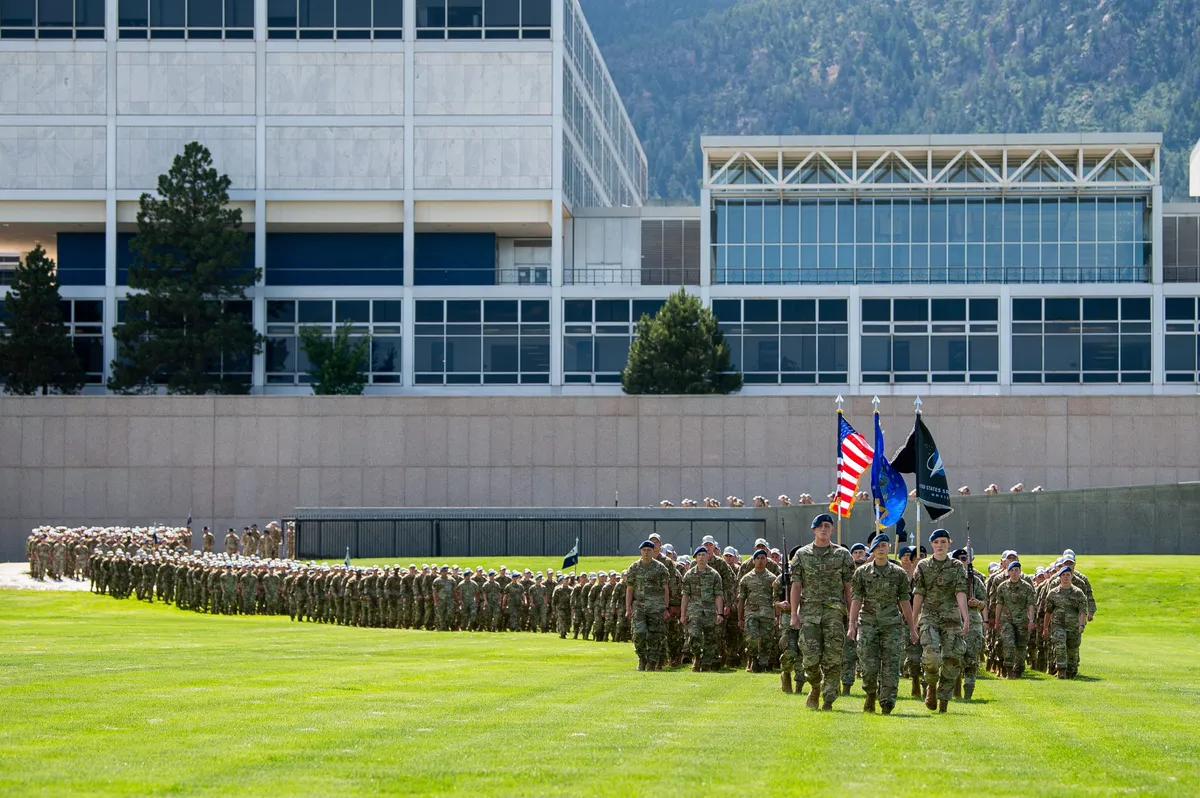
Expansion of USAFA rather than creation of a separate Space Force Academy compresses the officer pipeline for space operations into existing Air Force Academy curricula and faculty — forcing curriculum redesign and potentially delaying specialized space training for cadets in the near term.
If implemented, this creates a procurement ripple: USAFA will require facility upgrades (dormitories, classrooms, training infrastructure) in FY27-28 appropriations, competing for dollars against ongoing weapons system modernization and creating a window for construction and facility management contractors (AECOM, Turner, Hensel Phelps) to bid into military construction (MILCON) projects.
The recommendation to expand USAFA rather than create a standalone Space Force Academy reduces capital expenditure and accelerates operational integration of space officer production into Air Force Academy infrastructure — avoiding the 5-10 year build-out timeline of a new institution.
However, the article does not specify the current cadet corps size, the cost differential between expansion versus a new academy, or the timeline for implementation, making it impossible to assess whether this recommendation will be adopted or funded.
The 10% growth alone (estimated 500-700 additional cadets annually, based on typical USAFA class sizes) creates immediate pressure on dormitory, classroom, and training range capacity — a constraint that will surface in FY27 budget submissions to Congress.
The article does not disclose whether the board's recommendation carries binding authority, what Congress's track record is with this board's prior recommendations, or whether Air Force leadership has endorsed or opposed the proposal.
Fault Lines
Strategic intelligence, synthesized daily — with a public track record. Every call graded against what actually happened.