Zelensky Links Russian Oil Revenue to War Funding Amid Ukraine Strike Campaign
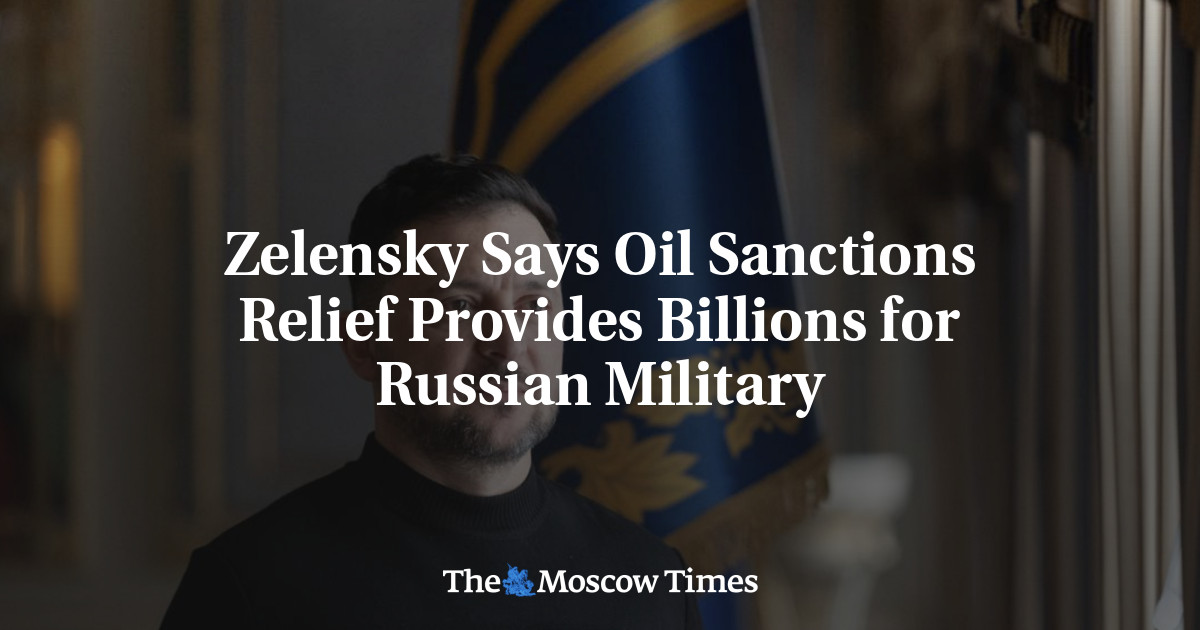
Zelensky's framing converts energy strikes from tactical degradation into a stated revenue-denial strategy, which alters the calculus for NATO allies providing weapons: if Ukraine is explicitly targeting Russian state revenue rather than combat logistics, Western governments must now decide whether to endorse (or constrain) strikes on civilian energy infrastructure as a legitimate war aim.
This shifts the conflict from military operations into economic warfare, where the outcome depends on sustained strike capacity and Russian ability to rebuild or reroute exports—both of which depend on allied provision of long-range strike systems (Storm Shadow, ATACMS, Scalp) and intelligence.
Zelensky is publicly linking Ukraine's energy-infrastructure strikes to sanctions policy, signaling that Kyiv views oil revenue interdiction as a war objective, not just a tactical degradation of Russian logistics.
This reframes the Tuapse strike—and future Ukrainian targeting—as part of a deliberate strategy to constrain Moscow's military budget rather than as incidental damage to civilian infrastructure. For defense planners, this indicates Ukraine is escalating beyond strike-and-degrade tactics into a sustained campaign to erode Russian state revenue.
The April 18 Tuapse strike's 880,000 bpd impact is material: at current prices (~$80/bbl), a sustained 880k bpd loss represents roughly $70 million per day in foregone Russian revenue. If Ukraine sustains strikes at this cadence, annual impact approaches $25 billion—a significant portion of Russia's defense budget.
The strategic risk: if Russia perceives energy infrastructure as a legitimate war target under this logic, it creates reciprocal justification for strikes on Ukrainian power and fuel systems, further escalating the conflict's economic dimension.
The article does not specify whether Zelensky's statement represents a formal shift in Ukraine's targeting doctrine, whether Western allies have endorsed energy infrastructure as a legitimate target, or what threshold of Russian revenue loss Ukraine considers militarily decisive.
Fault Lines
Strategic intelligence, synthesized daily — with a public track record. Every call graded against what actually happened.