Royal Navy Mine Countermeasures Mothership Departs Gibraltar for Strait of Hormuz; 100+ Personnel Deployed
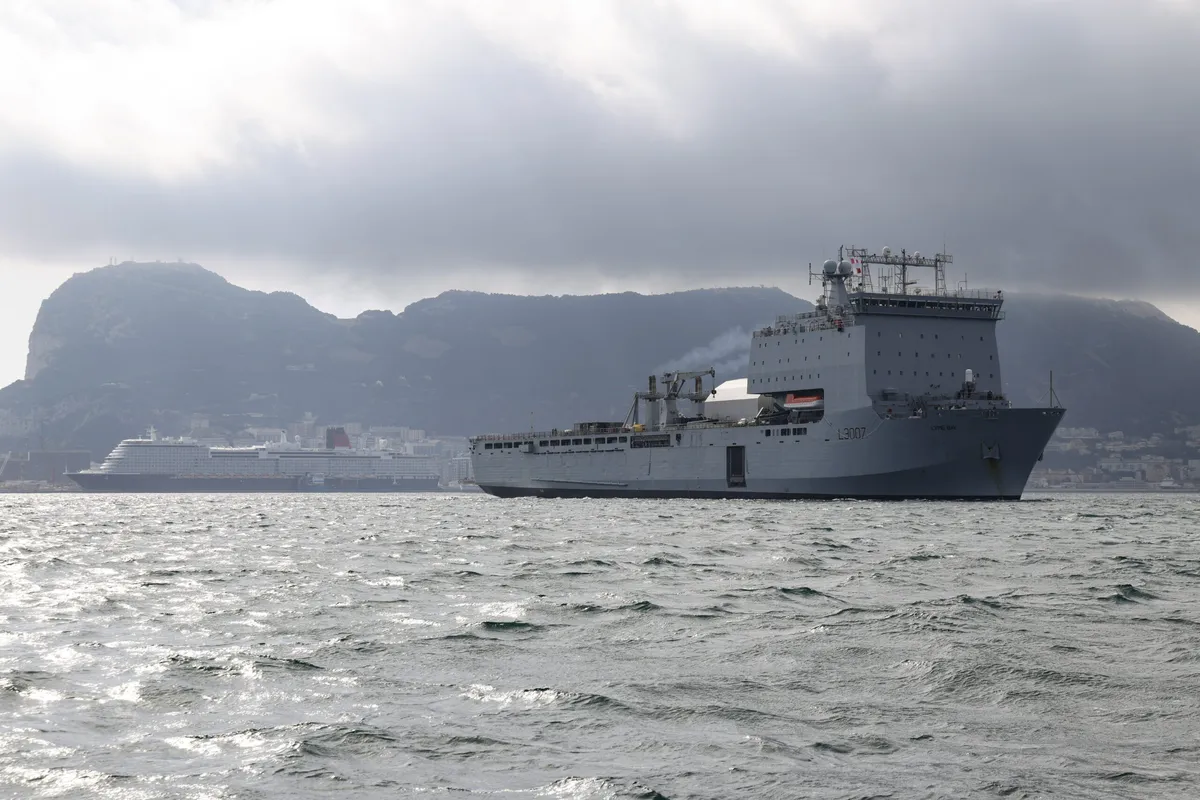
The deployment assumes Iranian or proxy forces will test the Strait again, which is a bet that the May 26 U.S. strikes did not achieve deterrence. If Lyme Bay reaches station and encounters active mining operations, the U.K. faces a choice: clear lanes under fire (risking casualties and widening the conflict) or withdraw and cede control to Iran.
France's involvement suggests European capitals are hedging against U.S. disengagement—they're establishing their own capability to protect commerce without Washington. This also exposes a supply-chain vulnerability: if the minehunting operation sustains for 6+ months, Lyme Bay cannot rotate home without a second mothership, and the Royal Navy has only one other MCM platform in the region.
This signals the first kinetic commitment to contested waters in the Gulf after the Iran strikes of May 26.
The UK and France are moving from diplomatic posturing to forward-deployed mine-clearance capability, which means they're preparing for sustained operations in a chokepoint where 21% of global oil transits. The 100-person team is a tripwire force—large enough to establish presence, small enough to avoid escalation signaling, but sufficient to clear lanes if Iranian or proxy mining resumes. Watch whether the U.S.
Navy coordinates strike coverage or leaves European assets to operate independently; that tells you whether Washington sees this as a joint campaign or a European theater problem.
Did the U.K. and France pre-coordinate this with the U.S., or are they moving unilaterally to fill a gap left by American focus on Iran retaliation? The timing—three days after U.S. strikes—suggests either parallel planning or independent action to prevent escalation.
Fault Lines
Strategic intelligence, synthesized daily — with a public track record. Every call graded against what actually happened.