War on the Rocks Analyst Argues Status Recognition, Not Coercion, Could Improve US-China Relations
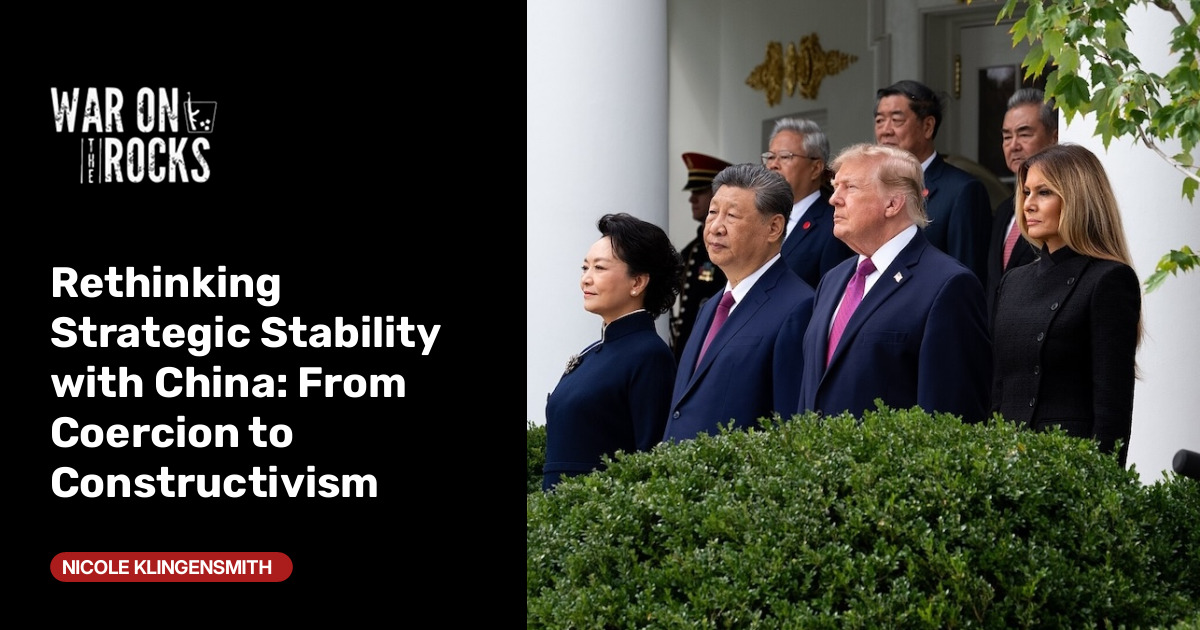
If the administration adopts a status-recognition framing at the summit, the first test will be whether Beijing treats it as a genuine concession or a rhetorical repackaging of existing positions.
China's July 2026 ICBM tests from a PLA submarine — already covered by Fault Lines — give Beijing a stronger hand in any hierarchy-based argument: the PLA has demonstrated second-strike capability, and Chinese negotiators will use that to press for parity language that the US has historically refused.
An NSC that accepts status parity in exchange for transparency measures would be trading a symbolic concession for a verifiable one, which is the deal structure arms controllers have sought for a decade.
With a Trump-Xi summit approaching and direct US-China nuclear arms control talks stalled, the NSC and the Office of the Under Secretary of Defense for Policy face a concrete preparation question: whether to table status-based concessions as a negotiating entry point rather than leading with coercive postures that the article says have produced no movement.
Klingensmith's Track 1.5 affiliation means this framing is likely already circulating in back-channel exchanges with Chinese counterparts, giving it more operational weight than a standard academic commentary. The article does not specify a summit date, so the preparation timeline is unclear.
Has the Track 1.5 channel Klingensmith references already floated status-recognition language to Chinese interlocutors, and if so, what was Beijing's response?
Fault Lines
Strategic intelligence, synthesized daily — with a public track record. Every call graded against what actually happened.