UK Deploys HMS Dragon to Middle East for Post-Conflict Hormuz Escort Mission
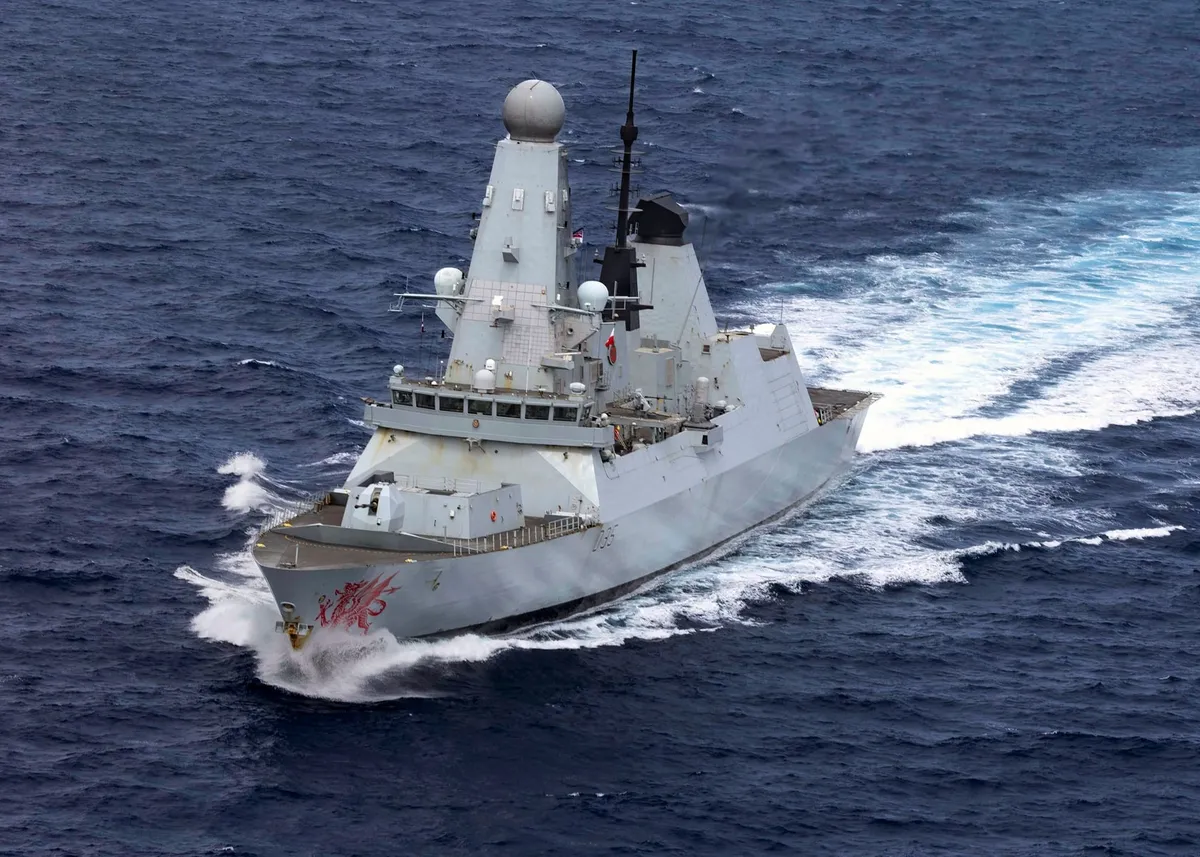
If the blockade extends past Q3 2026, Dragon becomes a sunk cost in theater—the UK will face pressure to either commit her to active escort ops (escalating the mission scope) or rotate her home, signaling the multinational mission is delayed.
The real constraint is allied agreement on rules of engagement: the US may want aggressive ROE to deter Iranian interference; the UK and EU may prefer a constrained escort model that avoids direct confrontation. Dragon's pre-positioning forces that conversation to happen now, not after the blockade ends.
If allies cannot agree on the escort framework by Q4, the mission delays and Dragon sits in Bahrain burning fuel and crew readiness.
This commits UK naval capacity to the Hormuz problem after Iran's blockade lifts—but the timing assumption matters enormously.
The UK is betting the conflict ends soon enough that pre-positioning Dragon now (May 2026) makes sense; if the blockade persists beyond Q4 2026, the ship sits idle in theater while the Royal Navy's destroyer fleet (only 6 Type 45s operational) faces other commitments.
More immediately: the signal tells the US and Gulf allies that London is already planning the escort architecture for post-conflict operations, which means CENTCOM and the UK MOD are coordinating on multinational task force composition and rules of engagement.
Watch whether France, Australia, or Japan announce similar pre-positioning moves—that would indicate a formal allied commitment to the escort mission, not just UK contingency planning.
Has the UK MOD formally coordinated with CENTCOM on the composition and command structure of the post-conflict escort task force, or is Dragon's deployment a unilateral positioning move ahead of allied agreement?
Fault Lines
Strategic intelligence, synthesized daily — with a public track record. Every call graded against what actually happened.