Russian Drones Strike Rescue Teams at Zaporizhzhia School; 55 Killed in November 2 Bombing
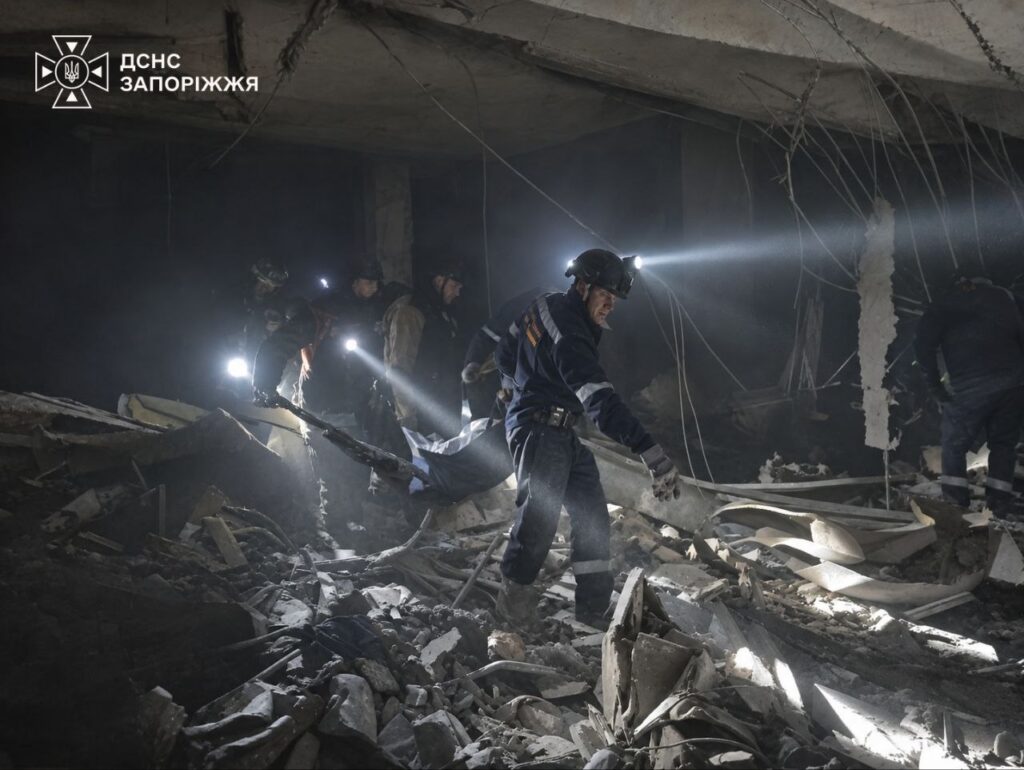
The targeting pattern exposes a hard constraint on Ukraine's civil defense: rescue operations are now high-value targets, not just collateral exposure.
If Russia sustains this practice across multiple strike sites, Ukraine's emergency services face a choice between accepting casualties among first responders or accepting longer body recovery and slower civilian shelter restoration — both degrade morale and civil resilience.
The injury to two search dogs (one with acute stress reaction that may end its operational life) is a secondary casualty measure; losing dog teams reduces rubble-search capacity, which compounds the delay problem.
Ukraine's State Emergency Service is now operating under the assumption that any concentrated rescue effort becomes a target window — and Russia is pricing that into its targeting calculus.
The three-ton FAB-3000 strike on November 2 killed 55 civilians sheltering in an underground facility; the follow-on drone attacks on rescuers eight hours later suggest Russia is deliberately extending casualty duration by attacking the response. This pattern — primary strike, then secondary strikes on first responders — has become systematic, not incidental.
Watch whether Ukraine's emergency services begin delaying rescue operations or rotating teams to different sectors to avoid concentration, which would further degrade civilian protection and extend body recovery timelines.
Are Ukrainian emergency services implementing operational changes to avoid concentrated rescue teams — rotating deployment patterns, delaying operations, or fragmenting response teams — and if so, what is the documented impact on recovery time and civilian access to shelter facilities?
Fault Lines
Strategic intelligence, synthesized daily — with a public track record. Every call graded against what actually happened.