UK Orders VLS Integration on SSN-AUKUS Subs; Signals Standardized Munitions Across Allied Fleets
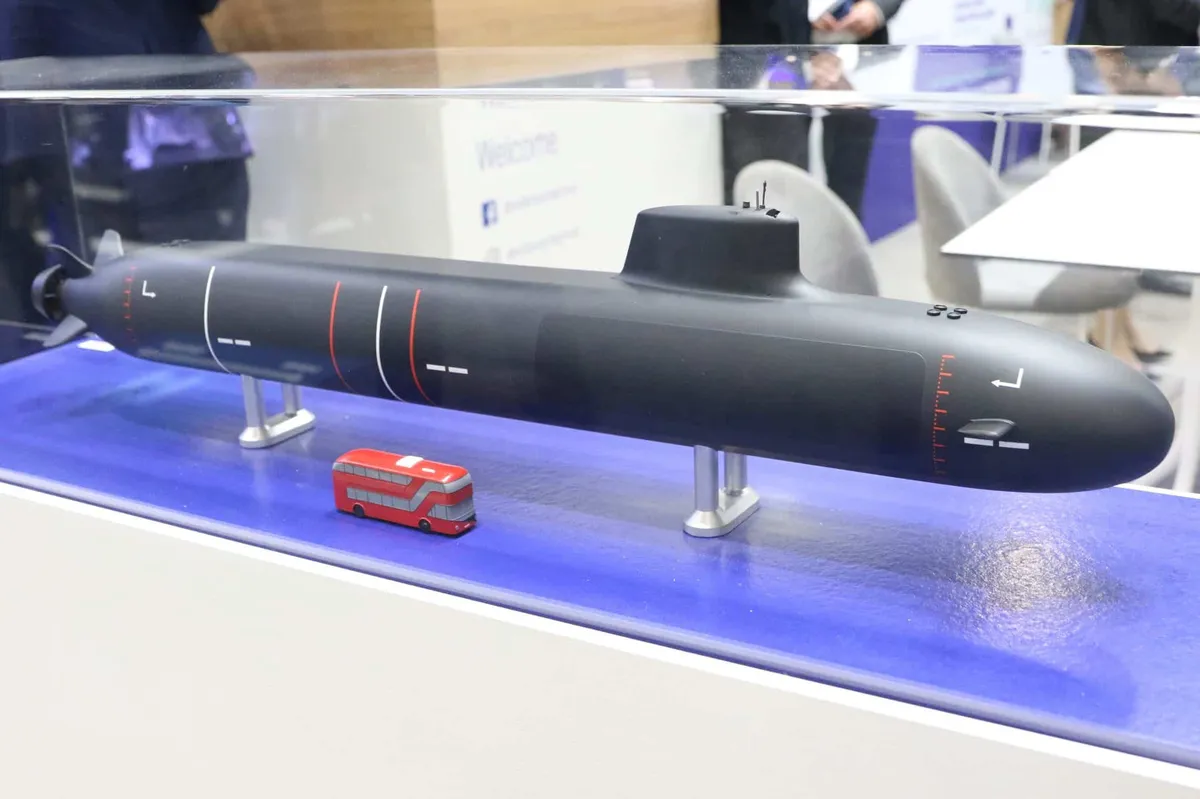
AUKUS VLS standardization converts the submarine partnership from a capability-sharing arrangement into a munitions-supply dependency chain. If the U.S. restricts Tomahawk or other VLS-compatible munitions to any AUKUS partner (due to export control tightening or congressional action), all three navies lose strike depth simultaneously.
This is particularly acute in the Indo-Pacific theater, where the Middle East escalation (Hormuz closure, energy disruption) could trigger congressional pressure to restrict advanced munitions exports to non-NATO allies, directly constraining Australian and UK operational reach during a contingency.
VLS integration on attack submarines requires significant hull redesign and extends procurement timelines — SSN-AUKUS is already tracking 2032+ initial operational capability.
The decision locks the UK, Australia, and implicitly the U.S. Virginia-class variant into a common munitions standard, which simplifies logistics and interoperability but reduces flexibility if threat environments shift. This also signals confidence in the AUKUS partnership sufficiently robust to commit to decade-long industrial alignment.
For primes (General Dynamics Electric Boat, BAE Systems Australia, Rolls-Royce), this triggers detailed design work and supplier qualification on the VLS integration, compressing the already-tight design schedule.
The notification does not specify which VLS architecture (Mk 41, Mk 57, or a new design), the number of tubes per hull, cost impact, or whether Australia has formally committed or is still evaluating. Without these details, the actual industrial footprint and schedule risk remain unclear.
Fault Lines
Strategic intelligence, synthesized daily — with a public track record. Every call graded against what actually happened.