Sub Czar Upgrades Columbia-Class Outlook to 'Absolutely Achievable' for 2028 Delivery
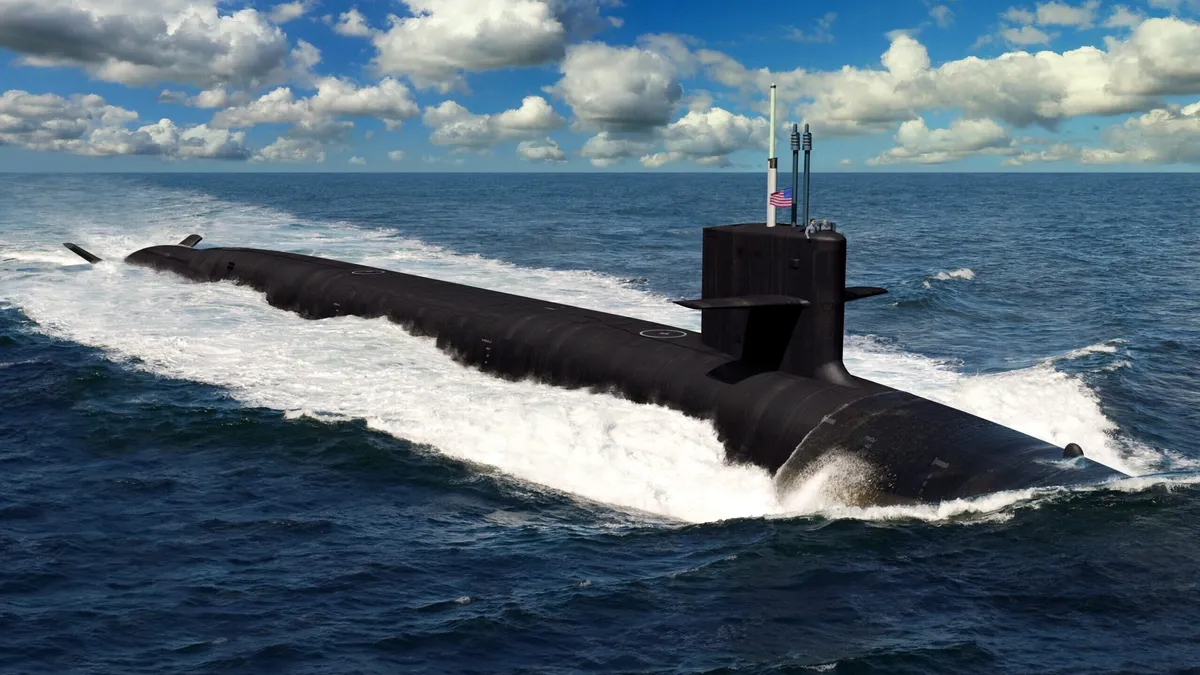
If the District of Columbia delivers in 2028 on schedule, the Navy will have demonstrated that the Electric Boat and Newport News module-split construction model can recover from a multi-year slip — a result that directly validates the same industrial approach planned for subsequent hulls.
If it slips again to 2029, Congress will have grounds to revisit the Columbia production rate and budget profile ahead of the FY28 shipbuilding request, and the SSBN force structure gap relative to the Ohio retirement schedule becomes a documented deterrence problem rather than a projected one.
Gaucher's upgraded confidence is the most senior on-record signal that the 2028 delivery window — already a one-year slip from the original 2027 target — is holding after a 2024 assessment projected a 12-to-16-month delay and a 2025 warning that delivery could slide to 2029.
General Dynamics Electric Boat carries the assembly risk: if production bottlenecks at Groton persist into 2027, the Navy loses the margin it needs to commission the District of Columbia before the Ohio-class retirement schedule forces a gap in the at-sea deterrent leg.
Full-rate Columbia production is not slated until the early 2030s, so the 2028 delivery is the only near-term proof point for the program's industrial recovery.
What specific production bottlenecks at Electric Boat's Groton yard is Gaucher resolving week-by-week, and has the propulsion system integration — the electric-drive system developed by Leonardo DRS, which has no prior operational baseline — cleared its qualification milestones?
Fault Lines
Strategic intelligence, synthesized daily — with a public track record. Every call graded against what actually happened.