Norway Commits $9B to Ukraine 2026, Expanding Nansen Program Military Funding
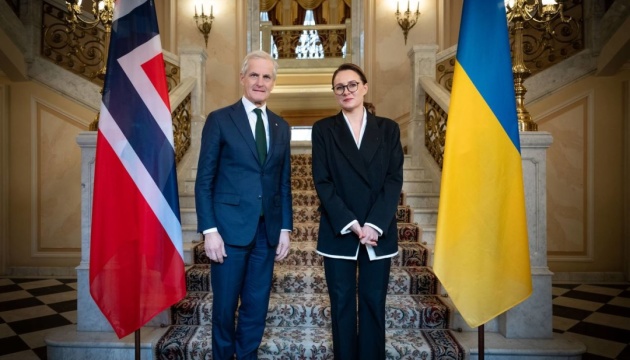
A sustained $9B annual Norwegian commitment to Ukraine reduces pressure on U.S. supplemental appropriations for 2026–27 and signals allied confidence in long-term Ukrainian operations, which directly affects U.S. defense industrial base planning for sustainment vs. new production.
If the military portion funds NATO-standard systems (air defense, artillery ammunition, HIMARS rounds), it competes for the same industrial capacity as allied procurement, potentially extending delivery timelines for Poland, Romania, and Baltic states — forcing EUCOM to choose between Ukrainian frontline resupply and NATO force posture reinforcement.
The scale of Norwegian commitment ($9B annually) makes Norway a top-3 non-NATO contributor to Ukraine after the U.S. and EU, but the strategic impact depends on three unknowns: (1) What fraction is military vs. humanitarian — the $9B headline obscures whether this is primarily weapons procurement, training, or reconstruction; (2) Whether funds flow through bilateral channels or NATO/EU coordination mechanisms, which determines whether this amplifies or duplicates allied procurement; (3) Whether Norway is front-loading 2026 commitments to lock in support before potential U.S. policy shifts.
Defense contractors and allied procurement planners need to know if this $9B represents new industrial orders or reallocation of existing aid budgets.
The article does not specify the military/civilian split of the $9B, the disbursement timeline within 2026, whether funds support procurement or sustainment, or whether this represents new Norwegian budget authority or reallocation of previously committed funds.
Fault Lines
Strategic intelligence, synthesized daily — with a public track record. Every call graded against what actually happened.