European Defense Autonomy Bids Shift Tech Investment Away from U.S. Suppliers
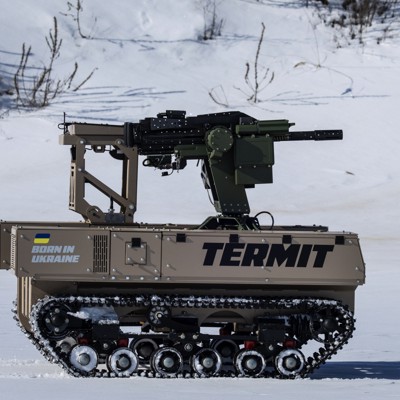
European defense autonomy mandates compress U.S. primes' addressable market in NATO and create a window for European competitors to lock in integration and sustainment contracts before U.S. firms can re-enter.
If EU regulatory preference for European-origin systems becomes binding in NATO procurement (rather than advisory), it forces U.S. primes to either establish European manufacturing/IP centers (capital-intensive, slow) or cede entire mission areas (air defense, tactical networks, autonomous systems) to Airbus, Rheinmetall, and Thales.
This directly affects which firms win the next generation of allied modernization contracts and shapes the industrial base that NATO relies on post-2030.
If sustained, this trend reduces addressable market for U.S. defense primes (RTX, LMT, NOC, GD) in Europe and accelerates European consolidation around Airbus, Rheinmetall, Leonardo, and Thales.
The mechanism is regulatory and political, not technical: EU directives on supply chain sovereignty and NATO interoperability requirements now favor European-origin systems, even at cost premium. This matters most for software, integration, and dual-use technologies where European firms can credibly compete (e.g., air defense integration, cyber, autonomous systems).
However, the article does not quantify which programs are shifting, what budget totals are at stake, or whether this reflects a durable policy shift or near-term Ukraine-driven procurement anomaly. U.S. primes' exposure depends on whether they can anchor European partnerships (as RTX has with Airbus on missiles) or face exclusion from NATO modernization contracts in the 2027–2032 window.
The article does not specify which defense programs, budget lines, or procurement timelines are shifting; does not name which U.S. suppliers are losing share or to whom; does not quantify the capital reallocation; and does not clarify whether this reflects permanent EU policy (e.g., new NATO interop...
Fault Lines
Strategic intelligence, synthesized daily — with a public track record. Every call graded against what actually happened.