Pakistan Commissions First Hangor-Class Sub in China; Extends Beijing Naval Reach into Indian Ocean
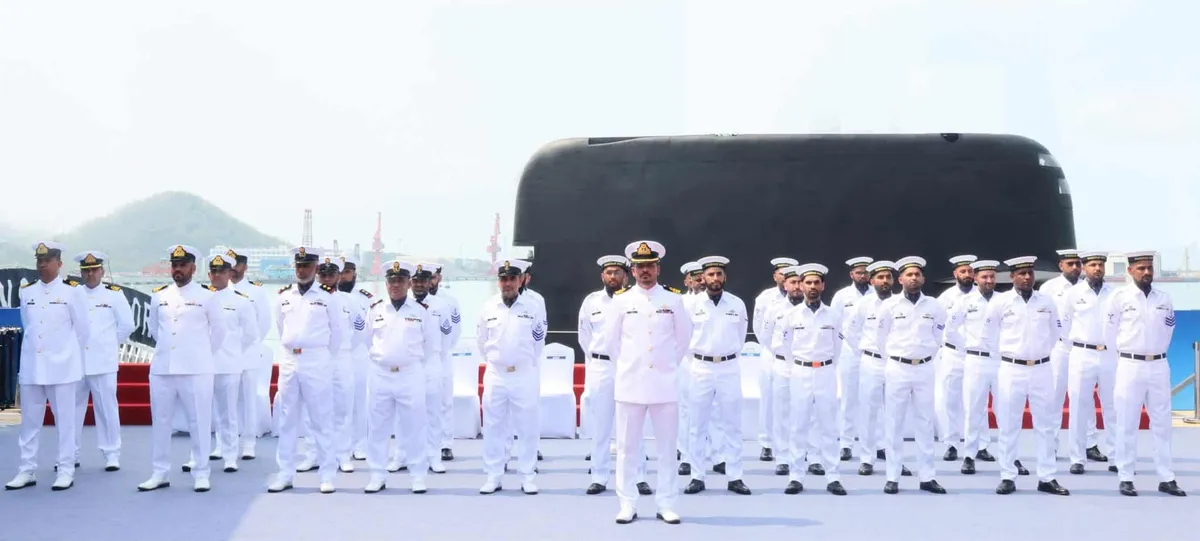
China's public ceremony timing — during US strategic attention on Iran and Middle East — signals to India and the US that Beijing is consolidating its Indian Ocean proxy capabilities even as Washington is distracted. This doesn't change US-India military cooperation, but it does confirm that Beijing sees the current US overstretch as a window to deepen Pakistan's naval modernization.
Pakistan's submarine fleet, still vastly outnumbered by India's, gains one modern platform but remains a deterrent asset rather than a power-projection tool.
This is a capability milestone, not a surprise.
Pakistan has been operating Chinese submarines since the 1970s; the Hangor-class is the latest iteration of that dependency chain. The real signal is timing and Chinese messaging. Beijing is publicizing Pakistan's naval modernization during the US-Iran blockade and active Israel-Lebanon fighting — a deliberate reminder that Beijing can sustain Pakistan's military posture when Washington is consumed elsewhere.
For Pakistan's Navy, the Hangor adds a credible anti-surface and anti-submarine platform for Indian Ocean operations, but it doesn't alter the force balance against India's nuclear submarine fleet. The ceremony in Sanya — not Karachi — underscores that this is as much a political statement of Sino-Pakistani alignment as a naval capability announcement.
Watch whether China publicizes delivery timelines for the remaining Hangor hulls (Pakistan has ordered at least two more) in the next 90 days.
How many additional Hangor-class boats are in the build pipeline, and what is the contracted delivery schedule? The article names only the first hull.
Fault Lines
Strategic intelligence, synthesized daily — with a public track record. Every call graded against what actually happened.