USS Pinckney MOD 2 Upgrade Debuts in Combat; Destroyer Sustains TLAM Strikes on Iran
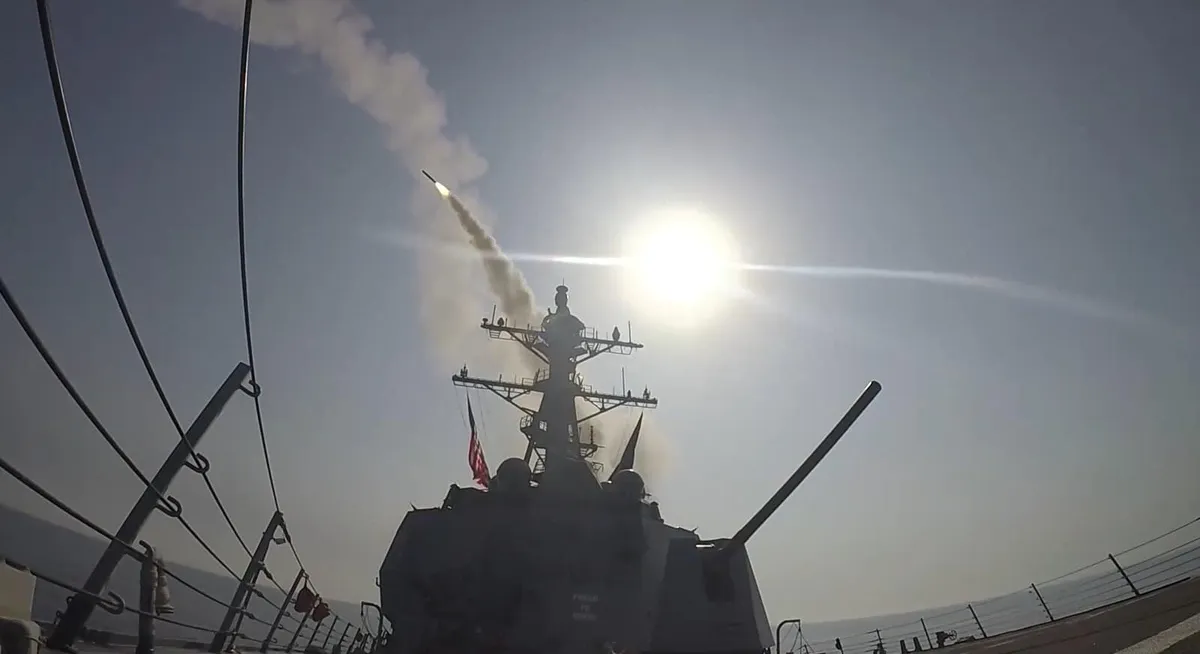
This deployment accelerates MOD 2 platform maturation feedback into the sustainment and follow-on upgrade pipeline.
If the strike revealed integration gaps or performance shortfalls, the Navy's planned MOD 2 retrofit schedule for the remaining 30+ Arleigh Burke-class ships will face schedule pressure and cost growth — directly affecting FY27-28 shipbuilding budget execution and Huntington Ingalls' modernization backlog.
Conversely, if performance validated the upgrade, this becomes a procurement justification for accelerating MOD 2 retrofit timelines ahead of the Taiwan contingency planning window (currently pegged to 2027-28).
This is a capability confirmation, not a capability milestone.
The MOD 2 upgrade's combat debut confirms the system is operationally ready, but the article does not specify which MOD 2 subsystems (combat management, sensor fusion, air defense) were actually employed in this strike. The relevance is narrow: it validates that the modernized destroyer can execute TLAM strikes in an active theater.
This matters to Navy readiness planners and Raytheon (TLAM producer) for sustainment demand signals, but the article provides no data on platform performance, integration issues, or whether MOD 2-specific capabilities (vs. baseline DDG-51 capability) were required for this mission. Absent performance metrics or integration details, this is a deployment confirmation, not evidence of new operational advantage.
The article does not specify which MOD 2 subsystems were employed, whether integration issues arose during the strike, or whether the upgrade provided tactical advantage over a baseline DDG-51.
Fault Lines
Strategic intelligence, synthesized daily — with a public track record. Every call graded against what actually happened.