SDA Awards AST SpaceMobile $30M Tactical SATCOM Demo Contract
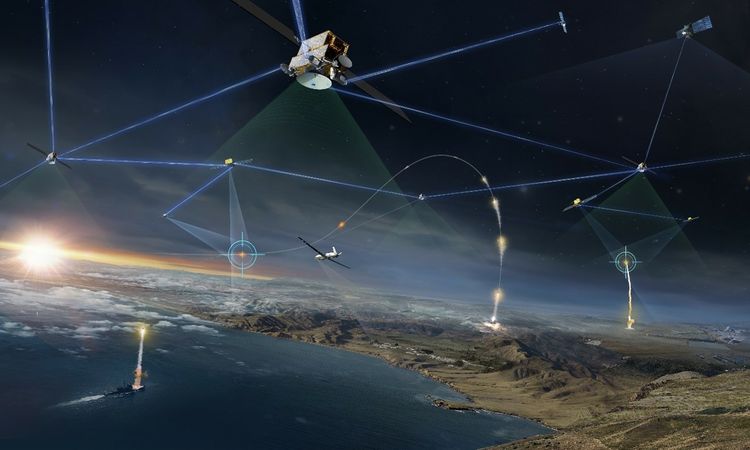
If AST's demo succeeds, SDA could shift SATCOM procurement away from purpose-built military systems toward commercial networks with military-grade overlays (encryption, priority access). This forces Viasat and Intelsat to compete on cost and availability rather than sole-source dominance, compressing margins on legacy mil-SATCOM contracts and accelerating their transition to hybrid commercial-military models.
Conversely, if the demo fails on latency or security grounds, it reinforces the case for dedicated mil-SATCOM and protects traditional primes' market share but leaves tactical units dependent on older, heavier terminals — a readiness constraint if contested SATCOM environments degrade commercial networks.
The award signals SDA willingness to test commercial SATCOM for military tactical use, a shift from traditional mil-spec procurement.
AST SpaceMobile's cellular-to-satellite technology (which enables direct smartphone connectivity) could reduce the logistical footprint of dedicated military SATCOM terminals in forward areas — but only if the demo proves latency, encryption, and anti-jam performance meet operational thresholds.
The contract size ($30M) is modest for a full integration; expect results to determine whether this becomes a production pathway or remains a one-off experiment.
The vendor pool mechanism itself matters more than this single award — it lowers barriers for smaller commercial players to compete for SDA contracts, potentially fragmenting future SATCOM procurement across multiple vendors rather than consolidating it with traditional primes like Viasat or Intelsat.
The article does not specify: (1) the demo's duration or success criteria; (2) which military units will participate or what operational scenarios will be tested; (3) whether AST's constellation is already operational or still in development; (4) how results will feed into production procurement tim...
Fault Lines
Strategic intelligence, synthesized daily — with a public track record. Every call graded against what actually happened.