Air Force Prioritizes Space Radar Over E-3 Replacement as Iran Ops Expose Airborne Gaps
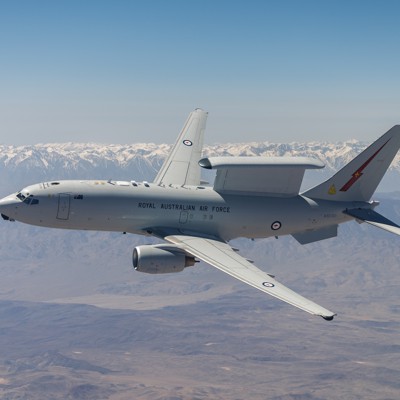
The decision to underfund E-3 replacement while prioritizing space radar forces operational commanders to rely on allied platforms (UK Sentry, Saudi E-3s, or Israeli Phalcon) during the Iran blockade, fragmenting the sensor architecture that the US-Indonesia logistics partnership is designed to support.
This creates a procurement window for Israeli Aerospace Industries and potentially Turkish or European radar vendors to fill the gap, shifting near-term ISR dependency away from U.S.-only systems and into allied co-production agreements — exactly the fragmentation that the 43% defense budget increase is meant to prevent.
The Air Force is accepting near-term sensor capability risk to fund a long-lead space architecture that will not operationally deploy for 5+ years.
This creates a critical coverage gap during the active Iran campaign — E-3 attrition will degrade real-time air defense coordination across the Middle East and Indo-Pacific theaters precisely when the blockade enforcement and Israeli strike operations require dense ISR integration.
The decision also signals that space-based radar (likely the Next Generation Overhead Persistent Infrared or a classified successor) is now the service's preferred path, which affects procurement timelines for Northrop Grumman, Boeing, and Raytheon in the sensor segment.
If E-3 losses continue at current rates, operational commanders will face a choice between accepting degraded coverage or accelerating interim replacements (modified business jets or Israeli Phalcon systems), neither of which aligns with the stated space-first strategy.
The article does not specify how many E-3s have been lost to date, the current operational inventory available for the blockade, or the timeline and cost of the space-based radar program that is receiving priority funding.
Fault Lines
Strategic intelligence, synthesized daily — with a public track record. Every call graded against what actually happened.