Royal Navy Deploys Two Carriers Simultaneously for First Time in 12+ Months; Hormuz Enforcement Capability Expands
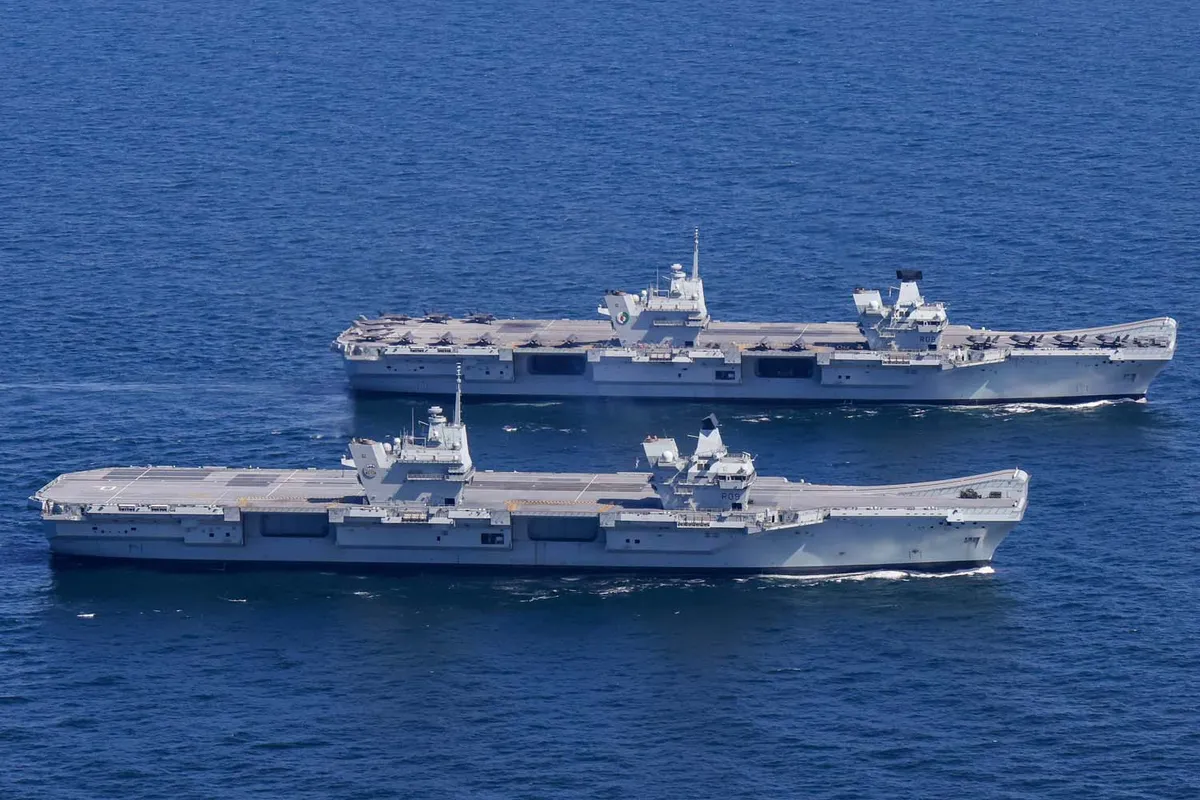
The dual carrier deployment removes UK excuses for non-participation in the multinational Hormuz enforcement task force the UK and France are actively planning (per April 22 signal).
If the UK commits either carrier to the 30-nation operation, it signals European willingness to underwrite global chokepoint security independently of US command authority—a prerequisite for the EU's Article 42(7) contingency planning (April 24 signal).
Conversely, if both carriers remain in European waters for NATO, it reveals the alliance still cannot simultaneously manage a regional enforcement operation and NATO deterrence, forcing the US to carry both loads.
This is the first tangible allied naval response to the sustained Hormuz blockade.
The UK is signaling it can contribute carrier strike capability to the multinational enforcement operation the UK and France are organizing—not just diplomatic coordination. However, this is still one carrier group's worth of actual combat power. The second carrier provides redundancy and rotation capacity, but doesn't double UK force projection into the region.
Watch whether either carrier actually transits to the Arabian Gulf or remains in European waters for NATO commitments. If both carriers are committed to Hormuz enforcement, the UK has stripped its carrier capacity for any other contingency, including NATO Article 5 scenarios in the North Atlantic or Baltic.
Are both carriers operationally available for immediate deployment to Hormuz, or is one still in post-maintenance workup? The article doesn't specify readiness status or intended operational area.
Fault Lines
Strategic intelligence, synthesized daily — with a public track record. Every call graded against what actually happened.