PrSM Achieves Combat Debut in Iran Campaign; Treaty Withdrawal Enables Deep-Strike Deployment
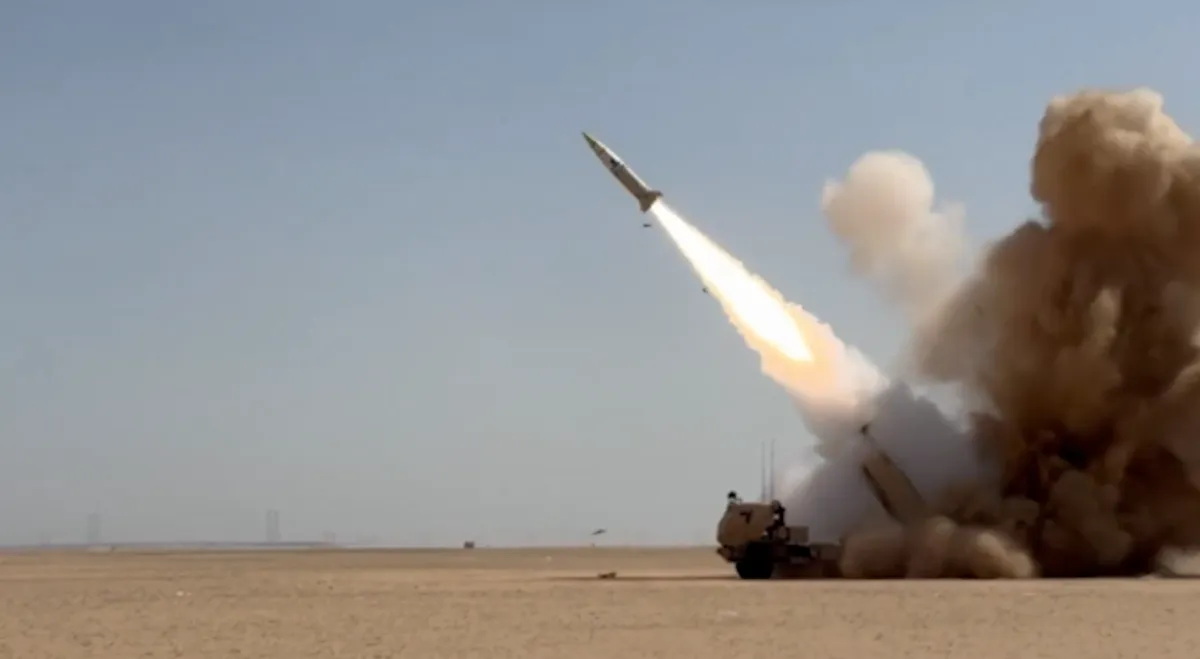
PrSM's combat validation directly accelerates Raytheon Missiles & Fire Control's FY27-28 production ramp and justifies higher LRIP lot quantities, creating procurement momentum that will compete with F-35 sustainment dollars in next quarter's defense budget markup.
The INF Treaty withdrawal's strategic payoff—a deployed intermediate-range precision weapon with no equivalent in Russian or Chinese arsenals—reinforces the Trump administration's deterrence narrative and may shift allied procurement priorities toward U.S. intermediate-range systems over European alternatives (Storm Shadow, Taurus), consolidating U.S. market share in a newly validated mission class.
PrSM's combat debut confirms the operational availability of a long-range precision system designed to penetrate defended airspace and strike fixed targets at 300+ km range.
For defense investors, this validates the $2B+ investment in PrSM development and signals sustained procurement demand through FY28 (current LRIP contracts). However, the article provides no specifics on strike count, targeting, or damage assessment—critical data needed to assess whether PrSM is replacing or supplementing B-1B and cruise missile strikes already documented in this conflict.
The INF withdrawal's strategic consequence—enabling a new class of intermediate-range precision munitions unavailable to competitors—is now operationally proven, which may accelerate allied interest in similar systems (South Korea's Hyunmoo, Poland's Piorun variants) and complicate arms control discussions if this conflict extends beyond March.
The article does not specify how many PrSM rounds were fired, against which targets, success rate, or whether PrSM strikes are replacing or supplementing the B-1B and TLAM strikes already reported in Operation Epic Fury.
Fault Lines
Strategic intelligence, synthesized daily — with a public track record. Every call graded against what actually happened.