South Korea's KF-21 Production Rollout Advances Indigenous Fighter Amid Wartime Command Shift
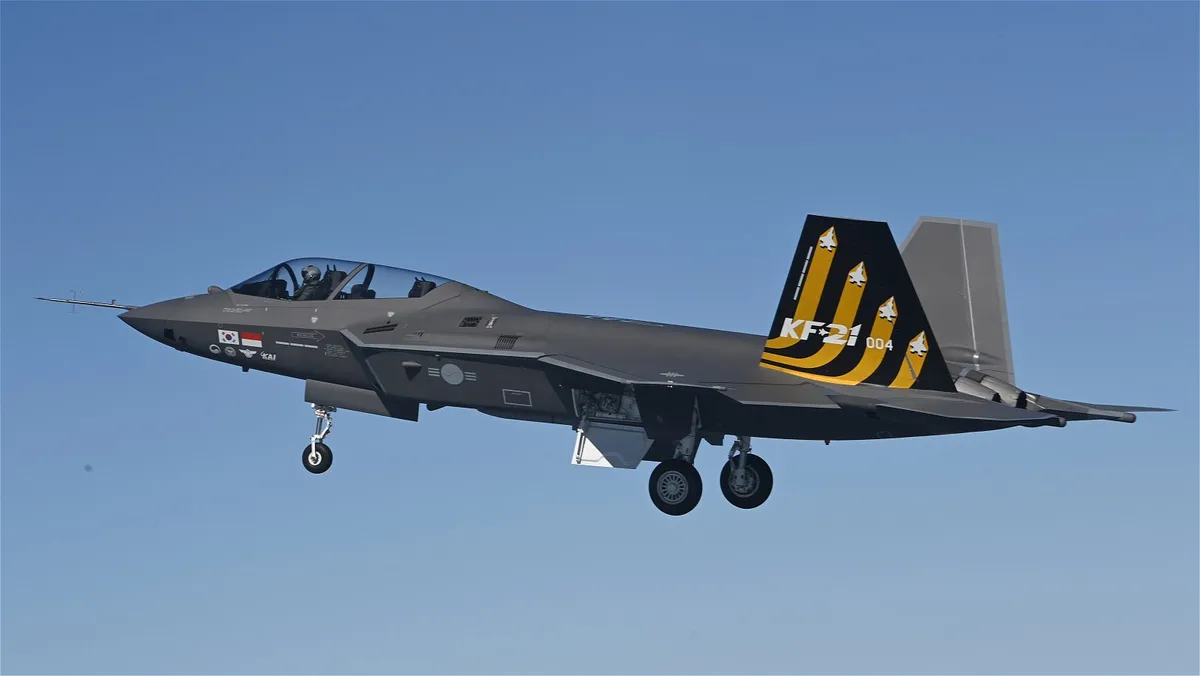
Lee's wartime command transfer announcement and the KF-21 rollout are now operationally linked: independent command authority is only credible if South Korea possesses sufficient indigenous air power to sustain operations without US fighter assets.
Slow KF-21 production or integration delays will either force Seoul to delay the command transfer (exposing it as political theater) or proceed with transfer while remaining dependent on US F-16 and F-15K sustainment — undermining the stated strategic rationale.
This creates a procurement timeline constraint: if KF-21 production cannot meet squadron-level availability targets before wartime control formally transfers, Seoul faces a 3-5 year window where it claims operational independence but operationally lacks it.
The KF-21 production milestone directly supports Lee's stated objective to reduce US dependency in wartime command and control.
A domestically produced fighter fleet reduces reliance on US supply chains and operational constraints during contingencies — critical if South Korea assumes independent wartime command authority. However, the KF-21 program has faced delays and cost overruns; the first production aircraft's actual combat readiness timeline and integration into Korean command structures remain unspecified.
The timing suggests political messaging around autonomy rather than near-term operational impact, but production acceleration will determine whether Seoul can field sufficient indigenous air assets to sustain independent operations against North Korea without US support.
The article does not specify production rate, total units planned, delivery timeline to operational squadrons, or integration status with South Korean command systems.
Fault Lines
Strategic intelligence, synthesized daily — with a public track record. Every call graded against what actually happened.