France, Germany, India, Japan Race to Deploy On-Orbit Anti-Satellite Weapons
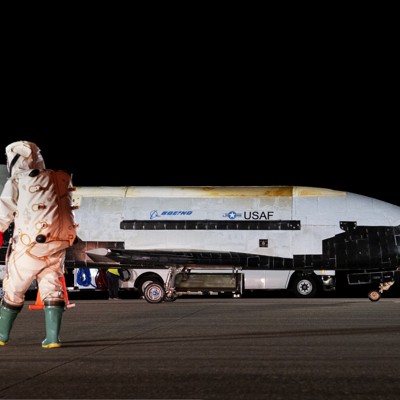
Proliferation of on-orbit weapons lowers the technical and political barrier to space conflict initiation.
If Japan, India, Germany, and France each possess independent anti-satellite capability, a regional contingency (e.g., China-Taiwan) can no longer be isolated to terrestrial or air domains — allied nations with orbital weapons may face pressure to use them preemptively or in retaliation, cascading a limited conflict into a multi-actor space war.
This also fragments space procurement: Lockheed, Northrop, and Raytheon face competition from Airbus Defence (Germany), Thales (France), and Indian/Japanese space contractors for allied spaceplane and on-orbit servicing contracts, compressing margins in the one sector where U.S. industrial dominance remains near-absolute.
This signals a fragmentation of space domain control away from the U.S.-China duopoly.
If France, Germany, India, and Japan each field independent on-orbit weapons or anti-satellite systems, it multiplies the number of state actors capable of denying orbital access — increasing collision risk, debris generation, and the likelihood of uncontrolled escalation in any future space conflict.
The strategic consequence: U.S. satellite architecture (GPS, communications, ISR) can no longer assume protection from a single adversary; allied nations are now competitors in space weapons development, complicating rules of engagement and burden-sharing in a Taiwan or Indo-Pacific contingency.
Germany's involvement is notable given NATO's reliance on U.S. space assets; a separate German capability suggests European independence from U.S. space command authority.
The article does not specify the technical approach (kinetic kill vehicles, directed energy, electromagnetic pulse, or other), development timelines, funding levels, or whether these nations intend integration with NATO/Quad space defense frameworks.
Fault Lines
Strategic intelligence, synthesized daily — with a public track record. Every call graded against what actually happened.