Russian Oil Exports Collapse 57% in Week; Baltic Drone Campaign Disrupts 1.75M Bpd
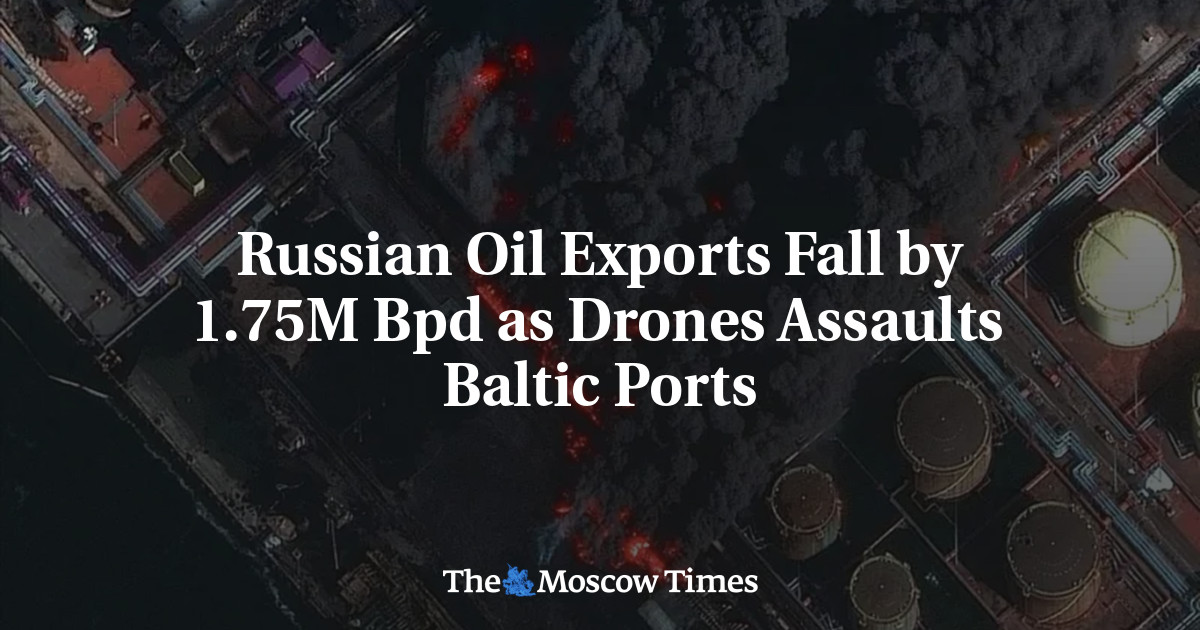
The Iran campaign has created a secondary theater: energy infrastructure targeting now extends to Russian logistics chokepoints, not just Iranian or Israeli assets. If Ukrainian or NATO-aligned drone strikes on Russian Baltic ports prove sustainable, Russia's crude export revenue—critical for war funding and alliance support to Iran—faces structural erosion independent of Middle East outcomes.
This converts the Iran conflict into a multi-vector economic pressure campaign on both Tehran and Moscow simultaneously, multiplying the fiscal cost of sustained operations for both states.
This is a secondary effect of the Iran conflict now cascading into energy markets outside the Middle East.
Russian export capacity loss of this magnitude (1.75M bpd represents ~40% of stated weekly throughput) will tighten global crude supply and raise Brent pricing, offsetting any downward pressure from potential Iranian production losses.
Defense investors should track whether this sustains: if Baltic drone strikes continue at scale, Russia's ability to fund its own military operations—and support for Iran—becomes constrained. Oil majors with Russian exposure (BP legacy positions, Shell divestments) face margin compression; refiners dependent on Russian Urals pricing gain hedging optionality.
The more immediate question: is this a one-week supply shock or evidence of a new targeting campaign against Russian logistics?
The article does not identify which Baltic ports were struck, the extent of damage, whether strikes are ongoing, the drone platform (Ukrainian, NATO-adjacent, or other), or whether the 2.32M bpd figure reflects supply destruction or just routing/logistical delays.
Fault Lines
Strategic intelligence, synthesized daily — with a public track record. Every call graded against what actually happened.