Ukrainian Forces Strike Crimean Oil Depots, FSB Command Post; Extends Deep-Rear Targeting Beyond Logistics
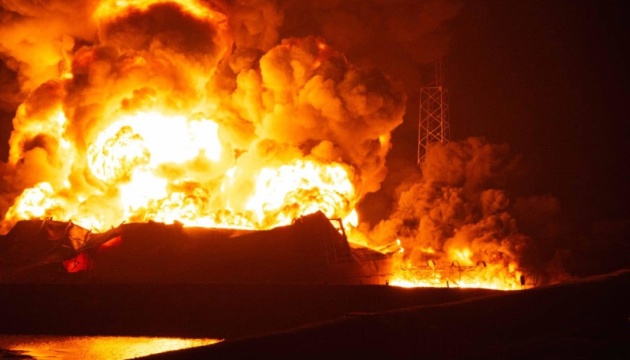
If the FSB command post was an active signals or HUMINT coordination hub, its degradation directly weakens Russia's ability to manage occupation governance and counterintelligence operations in Crimea — forcing Moscow to either accept reduced intelligence fusion or relocate nodes further from the coast and extend communication latency.
The oil depot strikes compound logistics pressure that has already forced Russian Black Sea Fleet fuel sourcing further inland. Combined with the doubling of 50+ km strikes reported June 5, Ukraine is systematically compressing Russian operational depth: frontline forces face accelerated attrition, rear logistics face growing interdiction, and command authority faces targeting.
This confirms Ukraine's operational kill-chain acceleration is now reaching intelligence and command nodes, not just supply lines — a shift that forces Russian military leadership to choose between centralized command vulnerability or dispersed operations that degrade coordination.
The FSB command post targeting specifically signals Kyiv is degrading Russian domestic security apparatus capacity to support occupation governance in Crimea. Watch whether Russian counter-strikes intensify against Ukrainian rear-area command centers in the next 72 hours, or whether Moscow accelerates air defense redeployment away from frontline cover.
What is the actual damage assessment at the FSB facility — did it degrade signals intelligence collection capacity, or was it a symbolic strike on a secondary office? The distinction determines whether Russia's ability to coordinate occupation security has been materially degraded.
Fault Lines
Strategic intelligence, synthesized daily — with a public track record. Every call graded against what actually happened.