Trump Praises Japan Defense Minister; Tokyo Declines Direct Hormuz Escort Role
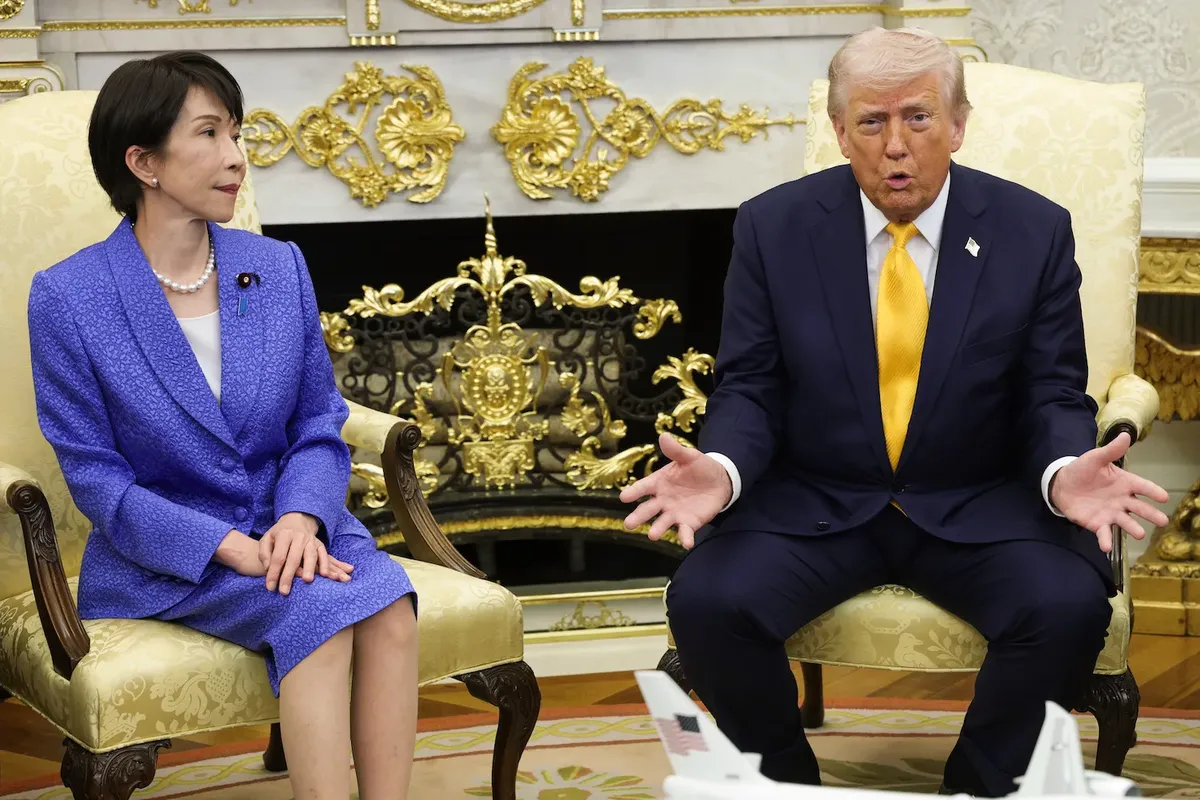
Japan's refusal to deploy naval forces to Hormuz while publicly supporting the war effort splits the 'coalition' into statement signatories and actual operators.
This forces the US to extend escort coverage with its own carrier strike groups and destroyers that would otherwise be positioned for Indo-Pacific contingencies, reducing surge capacity in the Taiwan Strait and degrading the forward presence that underwrites allied deterrence in the region.
If Hormuz escort operations extend beyond Q2 2026, Pacific Command's force posture becomes a dependent variable of Middle East commitment, not an independent choice.
Japan's public endorsement masks operational hesitation.
This gap between rhetorical support and military commitment matters because Japan is the only Indo-Pacific naval power with both capability and alliance proximity to sustain Hormuz operations. If Tokyo remains a statement-only participant while the US, UK, and France shoulder escort duties, the multinational force becomes a US-led operation with European auxiliaries—not a genuine coalition.
This affects burden-sharing calculus in the Pentagon and State Department, and signals to China that alliance cohesion in the Indo-Pacific may not extend to Middle East contingencies. Watch whether Japan's abstention reflects domestic political constraints or a strategic decision to preserve freedom of action on Taiwan.
The article does not specify what form of support Japan IS providing (intelligence sharing, logistics, financial contribution) or what explicit conditions Tokyo placed on military participation.
Fault Lines
Strategic intelligence, synthesized daily — with a public track record. Every call graded against what actually happened.