Ukraine Strikes VNIIR-Progress Plant; Russia's Shaheds and Glide Bombs Lose GPS Precision Without Kometa Arrays
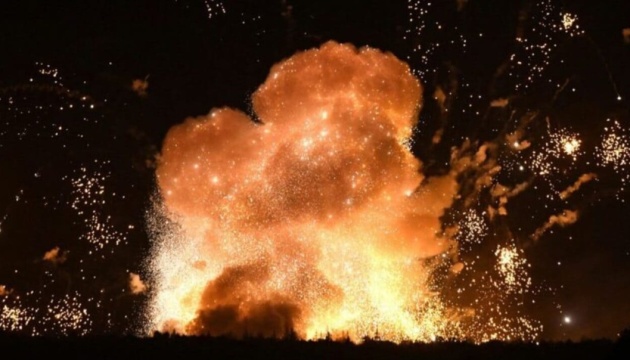
The strike confirms Ukraine's shift from attrition targeting (hitting munitions storage) to surgical supply-chain strikes (hitting irreplaceable manufacturing nodes). If VNIIR-Progress requires 8-12 weeks to restore to 80% capacity, Russia's Shaheds lose their precision advantage exactly when Ukrainian air defense is most congested—forcing Russia back to saturation attacks that consume more missiles per target.
That math favors Ukraine: 3x the sorties for equivalent effect means 3x the attrition of Russia's remaining inventory. Watch whether Russia accelerates Iranian Shahed imports as a substitute—a sign that domestic production is genuinely constrained.
This targets a single-source bottleneck in Russian precision munitions production.
Kometa arrays are not commodity components—they're specialized AESA antenna systems that take months to manufacture and test. If the plant sustains serious damage, Russia faces a 6-12 month rebuild timeline before resuming full production, during which Shaheds and glide bombs revert to inertial guidance with circular error probable expanding from 5-10 meters to 50+ meters.
That precision loss directly degrades Russia's ability to target Ukrainian air defenses, command posts, and energy infrastructure with the accuracy that has made these systems operationally effective. The constraint is not raw production volume—it's the specific technical capability to manufacture Kometa arrays. No other Russian facility is known to produce them at scale.
Ukraine's targeting intelligence here is sharp: they've identified and struck the actual single point of failure in Russian guided munitions, not just a general defense plant. This is the inverse of Western COTS substitution strategy—Russia cannot easily swap in alternative antenna systems because Kometa is purpose-built for these platforms.
Has Russia pre-positioned Kometa inventory at forward assembly sites, or does production damage immediately degrade operational sortie precision? If inventory is thin, Russian strike effectiveness should measurably decline within 2-3 weeks.
Fault Lines
Strategic intelligence, synthesized daily — with a public track record. Every call graded against what actually happened.