Merz Beijing Visit Tests Whether Europe Locks Into China Status Quo or Pivots Assertive
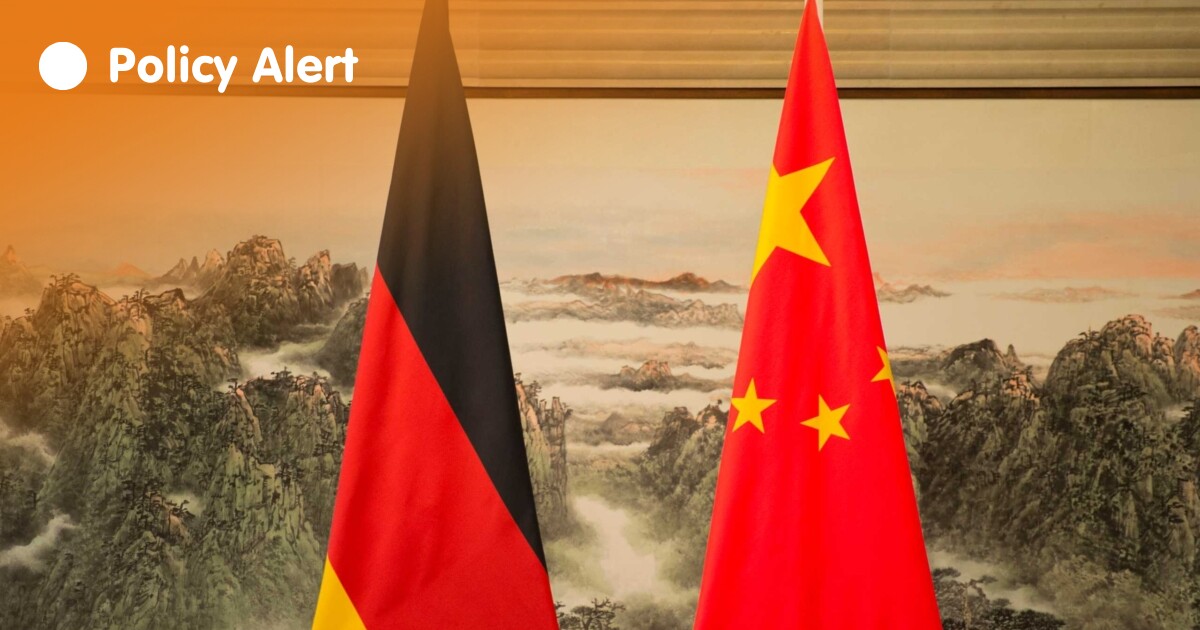
Germany's China posture directly constrains EU export control harmonization — if Merz signals willingness to accept Beijing's stability framing, it blocks coordinated restrictions on semiconductor equipment and advanced manufacturing tooling that allied procurement planners are counting on to isolate Chinese military supply chains.
Conversely, if he commits to assertiveness, it accelerates German industrial policy away from China dependence, forcing Siemens and other dual-use suppliers to redirect capacity toward NATO allies and creating procurement windows for US and allied firms in critical infrastructure and defense electronics.
Germany remains Europe's largest economy and most exposed to China trade disruption — roughly 8% of German exports flow to China annually.
Merz's stance signals whether the EU will coordinate tighter export controls on dual-use technology, align with US Indo-Pacific strategy, or continue prioritizing market access over strategic decoupling. If Merz endorses Beijing's framing, it weakens EU consensus on China industrial policy and delays allied procurement harmonization.
If he signals assertiveness, it accelerates EU tech sovereignty initiatives and forces German firms (Siemens, SAP, Bosch) to restructure supply chains earlier than planned. The outcome determines whether European defense primes gain or lose leverage in allied standardization negotiations over the next 18 months.
The article does not specify what policy outcomes or rhetorical commitments Merz is expected to make or avoid, nor does it detail which EU member states are pressuring Germany to take a harder line versus which are resisting decoupling.
Fault Lines
Strategic intelligence, synthesized daily — with a public track record. Every call graded against what actually happened.