Ukraine's Unmanned Systems Forces and the New Dimension of War
If the Abu Dhabi talks produce even a partial ceasefire, the institutional experimentation Honcharuk describes — continuous six-week adaptation cycles, civilian-culture tolerance for failure — stops generating new data at the pace that made it analytically useful.
The US Army's Futures Command and the UK's Defence Equipment & Support office are both mid-cycle on unmanned integration decisions; a frozen Ukrainian dataset favors the conservative 'integrate into existing branches' position that Ukraine's own generals initially held, because the counter-evidence stops accumulating.
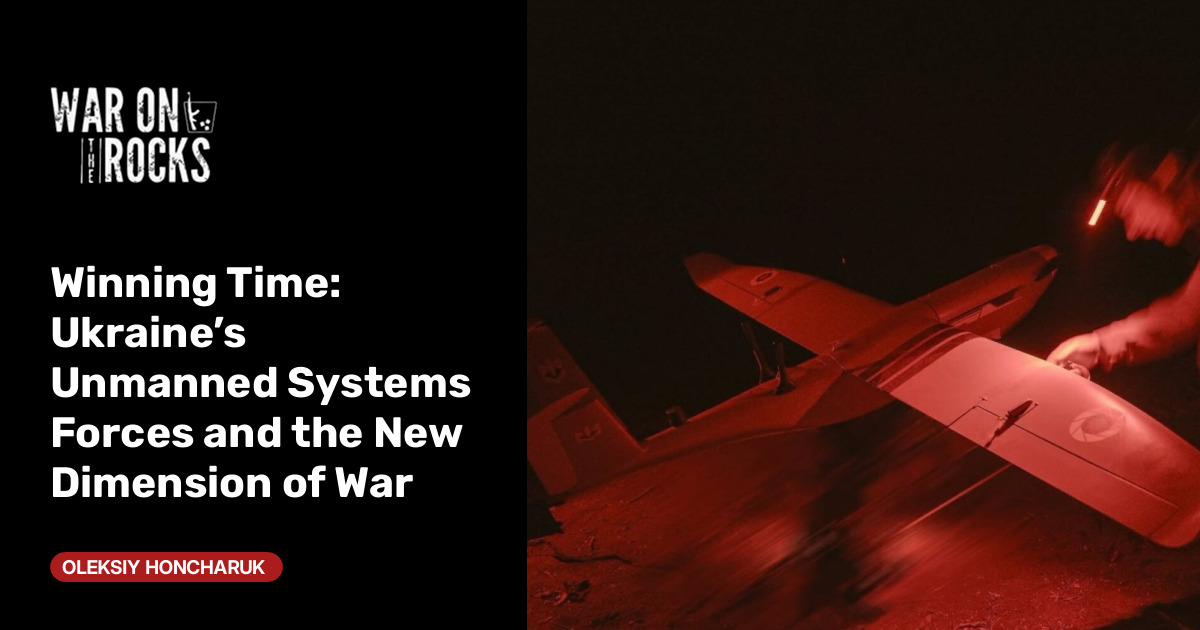
Ukraine's Unmanned Systems Forces offer the clearest live data point any defense ministry has on whether a cross-domain drone branch can outperform traditional service integration, and the Abu Dhabi talks beginning November 11 make that data politically urgent.
If a ceasefire or settlement locks in current force structures, NATO members debating their own unmanned branch architecture — the UK's Defence Science and Technology Laboratory and the US Army's cross-functional teams foremost among them — will be working from a frozen dataset rather than a war still generating lessons.
Honcharuk's 2.5 percent / one-third-of-losses ratio is the number those debates will cite regardless of whether the underlying methodology is published.
What is the actual methodology behind the claim that the Unmanned Systems Forces account for roughly a third of Russian losses — is that confirmed kills attributed to drone strikes, or a broader accounting that includes ISR-enabled fires from other branches?
Fault Lines
Strategic intelligence, synthesized daily — with a public track record. Every call graded against what actually happened.