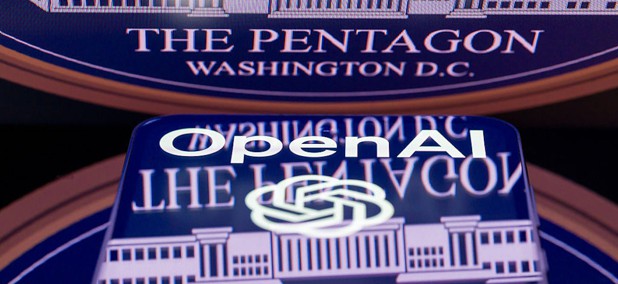
OpenAI ChatGPT Debuts on Pentagon's GenAI.mil in Early July; First Commercial Model Access
The GenAI.mil rollout surfaces a structural tension within the Pentagon's AI strategy. If ChatGPT is genuinely useful to warfighters and analysts, demand will exceed the platform's capacity to enforce boundaries — and commanders will route around it to use the commercial API directly.
If the CDAO locks down the platform too tightly (restricting queries, limiting token counts, adding latency), adoption stalls and the investment becomes theater. Second-order: this decision also signals to Anthropic, Google, and Meta that DoD procurement of commercial AI is now on the table. Expect a wave of vendor proposals to the CDAO by Q4 2026, each claiming superior safety or performance.
This is the first commercial large language model to receive authorized access to a DoD-wide AI platform, signaling the Pentagon's shift from closed-loop military AI to supervised commercial model integration.
The CDAO's decision to vet ChatGPT for GenAI.mil means defense personnel across multiple commands will have immediate access to a frontier model — but within a controlled environment that theoretically enforces data classification and operational security guardrails.
The critical constraint is whether GenAI.mil's segregation actually holds: if a user accidentally pastes classified material into ChatGPT, the model trains on it, and OpenAI retains it. Watch the CDAO's July rollout guidance and any data-handling protocols they publish — these will reveal how seriously they're taking the containment problem.
What specific data-handling restrictions does GenAI.mil enforce? Can users query ChatGPT with unclassified-but-sensitive information (e.g., personnel moves, procurement timelines), or is the platform restricted to fully public-domain queries?
Fault Lines
Strategic intelligence, synthesized daily — with a public track record. Every call graded against what actually happened.