Royal Navy Buys 3 Norwegian Mine-Hunting Motherships; First Delivery 2031, Option for 3 More
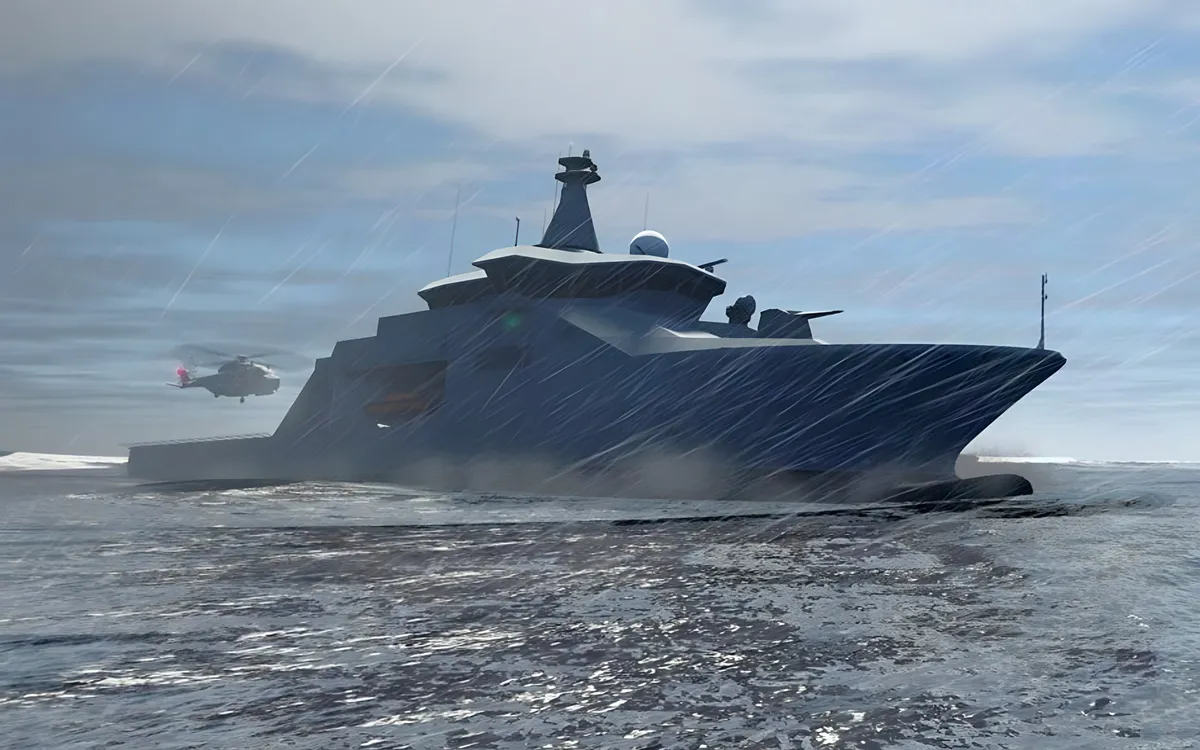
Norway's P1118 programme is now supplying vessels to the Royal Norwegian Navy, the Royal Navy, and Lithuania, which gives Kongsberg Defence & Aerospace and Salt Ship Design the volume to drive down unit costs and lock in a de facto NATO northern-flank mine-warfare standard.
If the option for three additional Royal Navy hulls is exercised, BAE Systems' Glasgow yards — already committed to the Type 26 Norway order — will have a second bilateral programme reinforcing the UK-Norway industrial relationship, making it harder for any future UK government to exit either deal without disrupting both.
Iran's mining of the Strait of Hormuz — which the MoD explicitly cites as the threat driver — gives the Royal Navy a concrete operational case for accelerating mine-countermeasure capacity, but the 2031 first delivery means the current Hormuz crisis will be resolved or transformed long before these hulls are in service.
The £90 million set aside covers three vessels drawn from the same Kongsberg Defence & Aerospace and Salt Ship Design family Norway is building for its own fleet, which standardises maintenance, spares, and interoperability across NATO's northern flank at a cost the article does not break down per hull.
TKMS ATLAS UK picks up an £8.8 million, three-and-a-half-year contract to sustain the Royal Navy's existing autonomous mine-hunting systems in the interim, keeping roughly 40 UK jobs active while the motherships are built.
What is the per-hull unit cost implied by the £90 million envelope, and does that figure cover fit-out for the Royal Navy's specific uncrewed systems or only the base vessel from the P1118 programme?
Fault Lines
Strategic intelligence, synthesized daily — with a public track record. Every call graded against what actually happened.