Taiwan's Hai Kun Submarine Fires MK 48 Mod 6 Torpedo in Weapons Certification Test
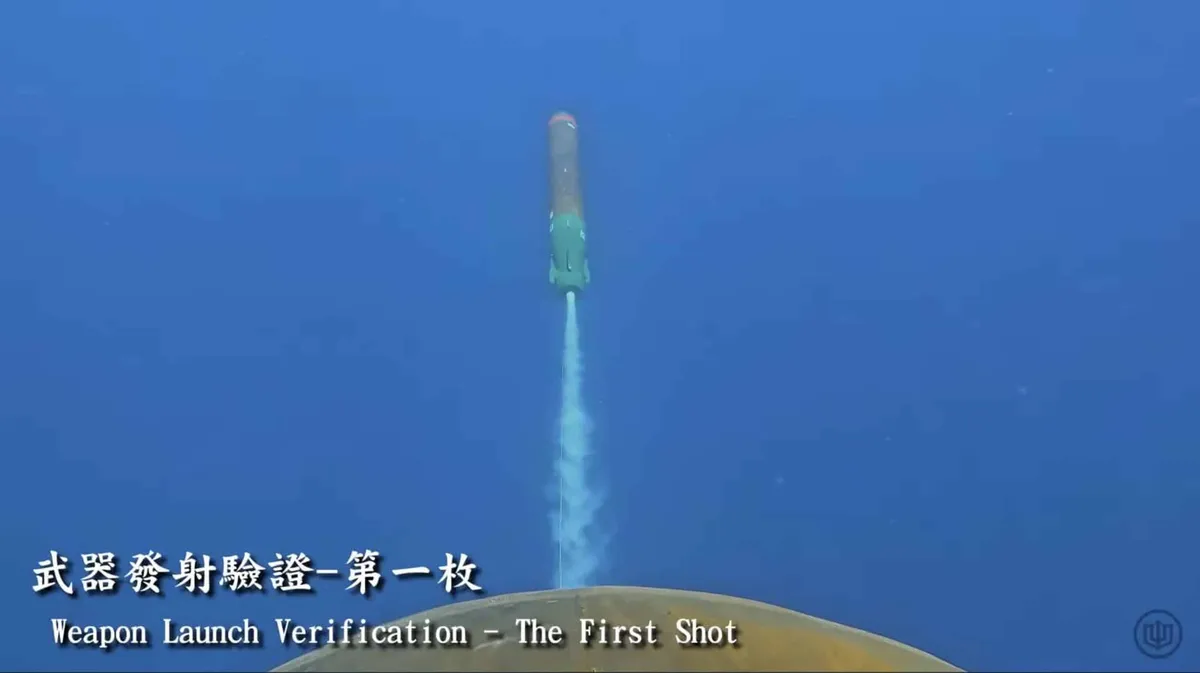
The torpedo firing closes a critical certification gap that has constrained Taiwan's submarine doctrine since SS-711's keel-laying in 2017. Until now, Taiwan's two aging Dutch-built Zwaardvis-class boats (Tench and Dace) carried MK 48s but lacked the industrial base to sustain or upgrade them independently — every major overhaul required US Navy logistics support and State Department approval.
Hai Kun's certification means Taiwan can now conduct autonomous torpedo maintenance, reload cycles, and incremental upgrades without notifying Washington, which expands operational flexibility during a crisis. The second-order effect: if PLA blockade operations extend beyond 60 days, Taiwan's three-boat undersea fleet becomes a credible harassment tool rather than a symbolic asset.
Taiwan's submarine force now has a domestically-produced platform certified to deploy its primary anti-ship weapon, reducing dependence on US maintenance pipelines and extending operational endurance during a Taiwan Strait contingency.
The Hai Kun class represents the only submarine production line outside the US, UK, and France — a constraint that will shape INDOPACOM's undersea deterrence planning if additional hulls enter service on schedule.
Watch the delivery timeline for SS-712 and SS-713: if CSBC maintains 18-24 month intervals between launches, Taiwan will have three operational boats by late 2028, which alters the calculus for any PLA blockade scenario.
What is the actual operational readiness timeline for Hai Kun? Has the submarine completed sea trials beyond weapons certification, and when does it enter active service with the Republic of China Navy?
Fault Lines
Strategic intelligence, synthesized daily — with a public track record. Every call graded against what actually happened.