HMS Prince of Wales Deploys to Arctic Sentry; NATO Carrier Presence Shifts North as Middle East Commitment Holds
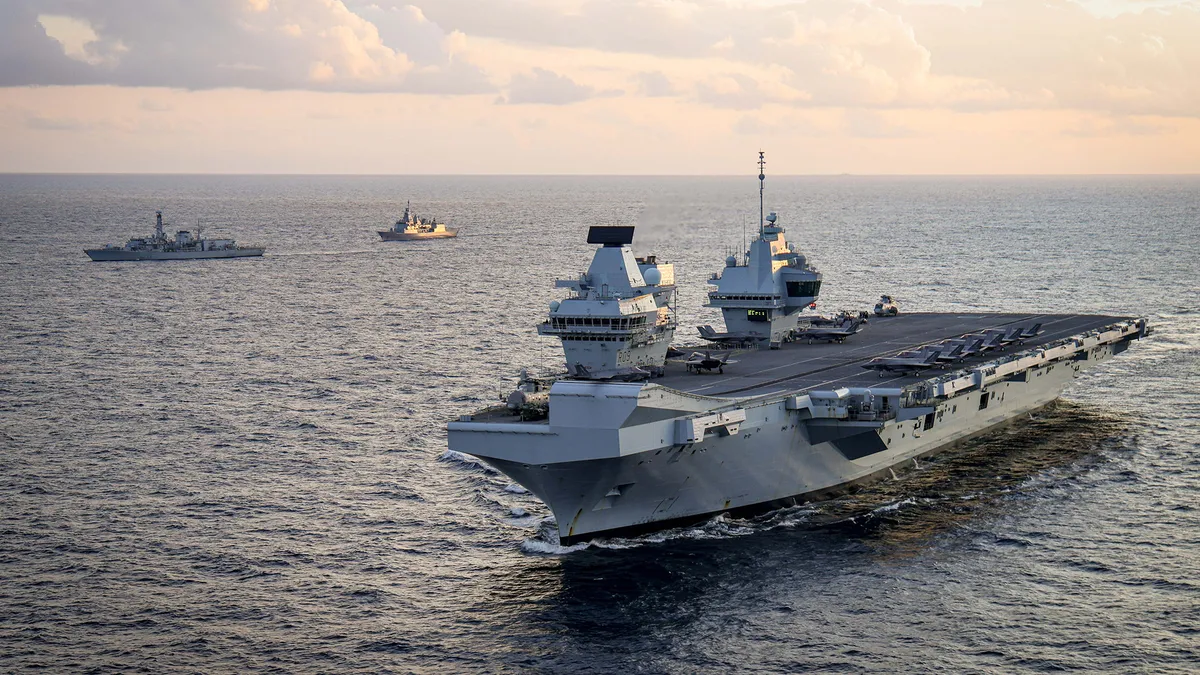
The Arctic deployment accelerates the decoupling of European and U.S. carrier operations. If HMS Prince of Wales is forward in the High North through 2026, UK escort availability for Middle East or Indo-Pacific rotations contracts, forcing European NATO members to either commit their own assets (France, Italy) or accept gaps in allied coverage.
This creates a procurement signal: European navies will need to expand escort and logistics capacity independent of U.S. theater support — driving demand for European-built frigates and replenishment ships, favoring Navantia, Fincantieri, and ThyssenKrupp Marine Systems over U.S. yards for allied orders.
This is a capacity problem wearing a readiness uniform.
The UK is committing a second major carrier to the Arctic theater at the exact moment three U.S. carriers are locked into the Middle East managing the Iran blockade and the EU is activating its own mutual defense clause due to Russian activity. NATO now has to staff two simultaneous high-end carrier operations — one in the Arctic, one in the Gulf — with the same pool of escort ships, logistics, and air wings.
The Arctic Sentry mission is real, but it's also a signal that the UK believes it must fill a visible gap in the north while Washington is tied down south. If this deployment runs parallel to sustained U.S. Middle East operations beyond Q3 2026, European carriers become the primary NATO asset in European waters, not a supplement to U.S. presence.
Is HMS Prince of Wales replacing a planned U.S. carrier rotation to the Arctic, or is this an addition to NATO's committed force structure? The timing — announced as three U.S. carriers are engaged in the Gulf — suggests the UK is stepping into a vacuum rather than executing a pre-planned rotation.
Fault Lines
Strategic intelligence, synthesized daily — with a public track record. Every call graded against what actually happened.