Ukraine Drones Strike Mius Bridge on R-280; Russia's Crimea Supply Route Closed
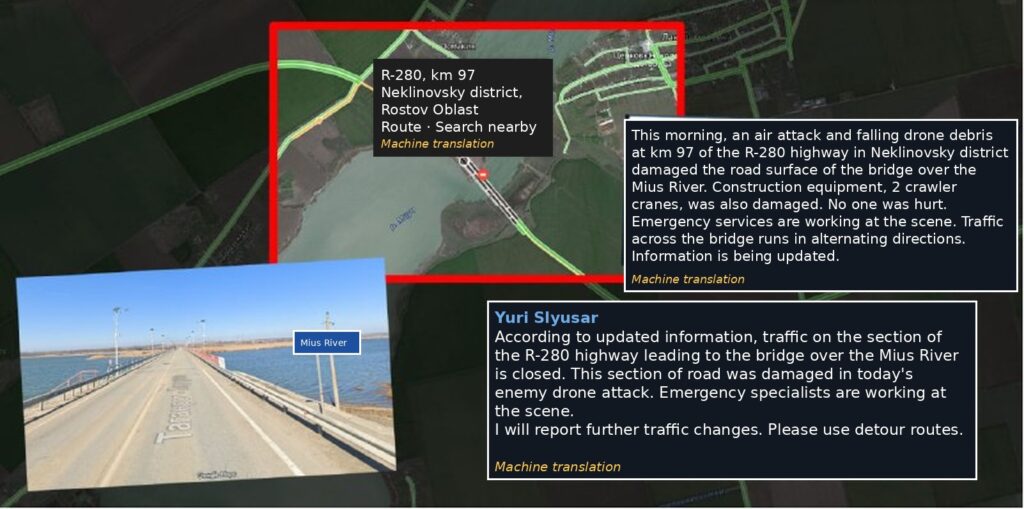
This strike lands inside a three-month campaign to isolate Crimea by attrition—Ukraine's defense minister publicly framed it as turning the peninsula into an island, and each bridge closure moves that closer to operational reality. The timing matters: Russia only began the four-lane widening in 2025, meaning the bridge was already at capacity before the strike.
A repair cycle of 4-6 weeks at single-lane throughput creates a window where Russian southern forces absorb a 40-60% logistics penalty, which translates directly into reduced fire support and ammunition availability for the Zaporizhzhia front.
Russia's land supply corridor to Crimea now runs through a single damaged choke point 155 km behind the front line, forcing all logistics traffic through alternate routes or a single-lane crossing that reconstruction will take weeks to restore.
The R-280 has been Ukraine's primary target for months—this strike confirms the campaign is shifting from harassment to infrastructure denial, which means Russian occupation forces in the south face a hard constraint: either accept 30-50% longer resupply cycles or concentrate traffic on roads closer to Ukrainian drone range.
Watch whether Russia attempts emergency repairs (visible within 10-14 days) or reroutes the entire Crimea supply column westward through Melitopol, which shortens the route but exposes it to a different vector of Ukrainian strikes.
What is the actual daily throughput on the R-280, and what percentage of Russian southern-theater logistics does the Mius crossing represent? If it's less than 20% of total volume, rerouting is manageable; above 40%, the occupation faces a genuine logistics crisis.
Fault Lines
Strategic intelligence, synthesized daily — with a public track record. Every call graded against what actually happened.