US Grants India Waiver to Buy Russian Oil; Energy Market Shock Spreads Beyond Iran Conflict
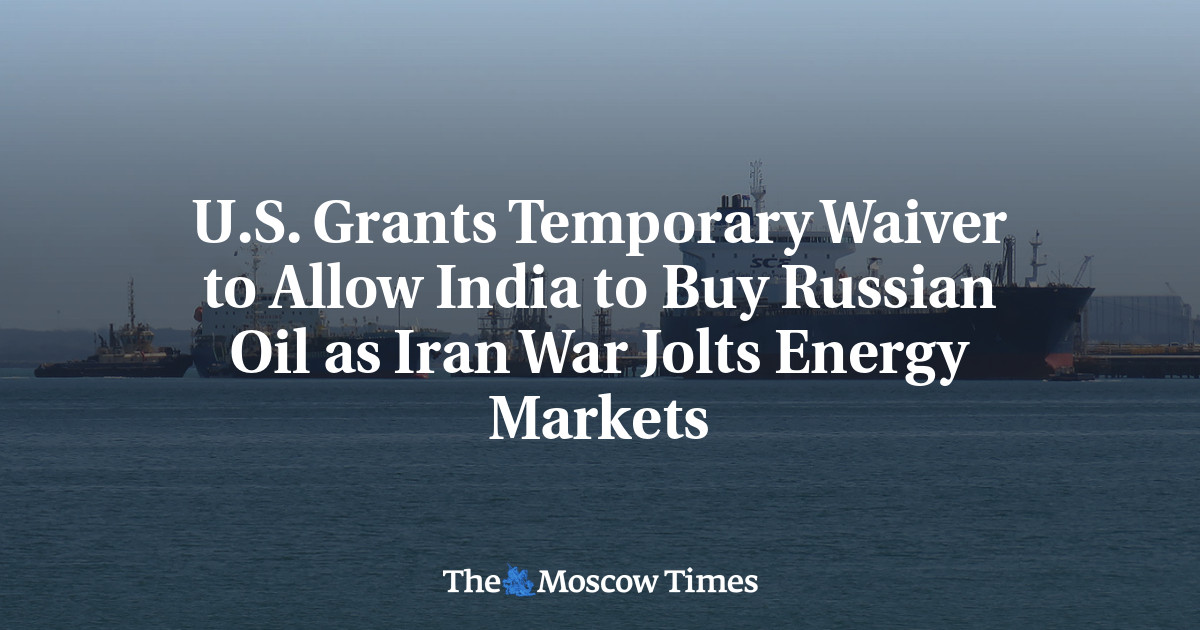
The waiver converts energy scarcity into sanctions leverage erosion. As long as the Iran conflict restricts global oil supply, any major importer facing price shocks can demand US exemptions from Russia sanctions—India has now demonstrated this works. Over the next 3-6 months, expect similar requests from Japan, South Korea, and potentially Europe, each framed as 'temporary' but each precedent-setting.
If the conflict extends beyond 90 days, the cumulative waivers will have functionally rebuilt Russian energy export channels that prior sanctions had constrained, meaning Moscow exits the conflict with a strengthened energy market position even if Iran's capacity remains offline.
This signals that energy market pressure from the Iran conflict is forcing immediate policy trade-offs.
By granting India sanctions relief on Russian oil, the US is prioritizing global energy price stability over secondary sanctions enforcement—a concession that suggests concern about sustained oil supply shocks.
India is the world's third-largest oil consumer; a waiver that expands Russian energy exports to New Delhi reduces the net impact of Iran's capacity loss on global markets, but it also legitimizes Russian energy as a strategic alternative to Iranian crude, entrenching Moscow's market position post-conflict.
The move does not address the underlying supply gap (Iran's production offline, US-Israeli campaign ongoing) and may signal to allies that sanctions compliance is conditional on energy availability—a precedent that weakens future export control credibility.
The article does not specify the duration of the waiver, volume caps, or whether the US intends to expand relief to other major oil importers (China, Japan, South Korea), which would determine whether this is a one-off tactical move or the opening of broader sanctions erosion.
Fault Lines
Strategic intelligence, synthesized daily — with a public track record. Every call graded against what actually happened.