USA Rare Earth Ships First MREC to Pentagon SPV Under 15-Year Take-or-Pay Deal
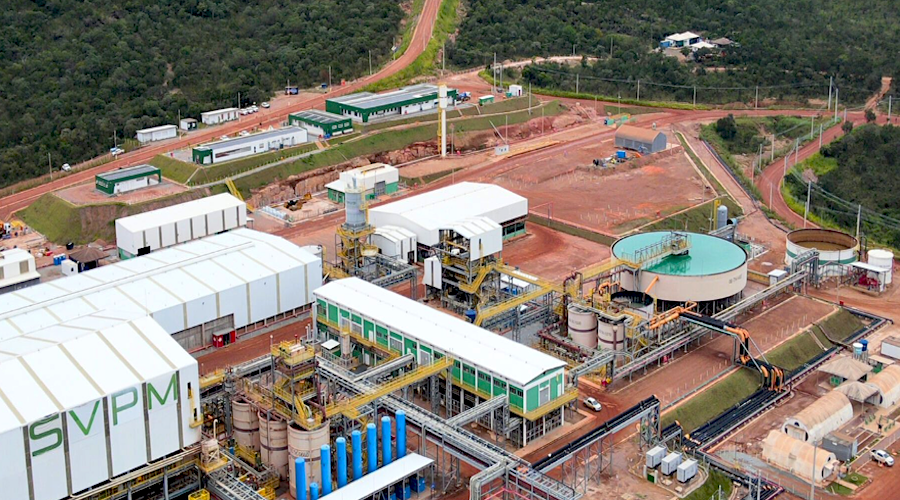
Brazil's federal government designated rare earths a high-priority critical mineral in early November, which means Serra Verde's expansion now sits inside a national policy framework that could accelerate permitting for Phase II but also invites Brazilian government leverage over export terms.
If Brazil moves to impose domestic processing requirements — a pattern seen in Indonesia with nickel — US SIIE LLC's take-or-pay agreement on raw MREC could face renegotiation pressure before the 15-year term runs.
The defense procurement offices managing autonomous systems and electric drive programs should treat Q2 2027, when Serra Verde hits its initial 4,000 tpa run rate, as the first real test of whether contracted volume matches actual delivery.
US SIIE LLC now has a contracted, non-China source of the four heavy rare earths — neodymium, praseodymium, dysprosium, and terbium — that go into NdFeB permanent magnets used in defense electronics, generators, and autonomous systems.
The floor prices matter: dysprosium is priced at $575/kg against Chinese prices that are up to 16 times lower, meaning the Pentagon is explicitly paying a sovereignty premium to hold this supply chain outside Beijing's reach. Serra Verde is ramping toward 4,000 tonnes per year TREO by Q2 2027, with a Phase II expansion under evaluation that could double output to roughly 12,800 tonnes annually.
What share of the Pentagon's annual NdFeB magnet requirement does a 4,000 tpa TREO run rate from Serra Verde actually cover, and has US SIIE LLC contracted additional offtake from other non-China producers to fill the gap?
Fault Lines
Strategic intelligence, synthesized daily — with a public track record. Every call graded against what actually happened.